

Supporting Autistic Students in Reading Groups
Unlocking Literacy: Strategies for Autistic Students in Reading Groups

Bridging the Reading Gap for Autistic Learners
Children on the autism spectrum often excel in word recognition while facing distinct challenges in reading comprehension. For educators conducting reading groups, understanding these unique learning profiles and implementing tailored strategies is essential to support autistic students' literacy development. This article explores evidence-based interventions, incorporating behavioral analysis and structured teaching paradigms, to enhance reading comprehension and engagement for autistic learners within group settings.
Understanding Reading Challenges in Autistic Students

What types of reading difficulties do children with autism typically experience?
Children on the autism spectrum often display strong word recognition skills, enabling them to decode written text effectively. However, they frequently face significant challenges with reading comprehension. This difficulty arises because, although they can read words accurately, extracting and constructing meaning from the text is often impaired.
Cognitive challenges affecting comprehension such as inference-making and narrative understanding
The root of these comprehension struggles lies in deficits in higher-level cognitive processes. Children with autism may find it hard to make inferences—drawing conclusions beyond the literal words in a text. They also tend to struggle with understanding the overall structure of stories and narratives. This means they can miss the connections between events or characters, making it harder to grasp the author's message or the story's flow.
Weak central coherence and detail-focused processing in autism
Another factor impacting reading comprehension is the tendency of autistic children to focus intensely on details rather than integrating information into a coherent whole. This trait, known as weak central coherence, makes it difficult for them to connect individual pieces of information meaningfully. As a result, while they notice and remember specifics, they may overlook the broader context that unites those details into a sensible story or argument.
These distinct challenges highlight the need for targeted educational strategies that support not only word decoding skills but also the complex thinking processes involved in understanding and interpreting text.
The Role of Applied Behavior Analysis (ABA) Therapy in Literacy Support
What is Applied Behavior Analysis (ABA) therapy?
Applied Behavior Analysis (ABA) therapy is a scientifically grounded approach focused on modifying behavior using learning principles. It aims to support individuals with autism by enhancing a range of skills including communication, social interaction, academic abilities, and everyday living skills. ABA leverages strategies such as positive reinforcement, discrete trial training, and naturalistic teaching methods to increase desirable behaviors while reducing those that are less helpful.
Techniques used in ABA to promote academic and social skills
ABA therapy employs various techniques to improve academic outcomes, including reading and comprehension, as well as social communication skills. For example, discrete trial training breaks down complex skills into manageable steps, while natural environment teaching encourages practicing skills in real-life contexts. Positive reinforcement strengthens behaviors like attention to text and expression of ideas from reading, which are often challenging for children with autism.
How is ABA therapy personalized for each individual with autism?
Personalization is central to ABA therapy. A Board Certified Behavior Analyst (BCBA) conducts detailed assessments of a child's strengths, challenges, interests, and environment. Based on this, individualized intervention plans are developed using methods tailored to the learner, such as contingent reinforcement and task analysis. These plans set specific goals for skills like literacy and social communication, considering the child’s unique profile. Collaboration with families ensures goals remain relevant, and ongoing data collection allows continuous refinement of strategies to maximize learning and motivation.
ABA's adaptable and evidence-based strategies make it a powerful tool for supporting literacy development in autistic children, complementing other structured interventions that target reading comprehension and language skills.
Benefits of ABA Therapy for Autistic Students' Reading Development

How does ABA therapy benefit individuals with autism?
ABA (Applied Behavior Analysis) therapy provides substantial benefits to individuals with autism by fostering positive behaviors and skill development through tailored instructional strategies. This therapeutic approach emphasizes improving communication and social skills, which are often challenging areas for autistic students.
Enhancement of communication and social skills
ABA therapy systematically teaches communication by using reinforcement techniques that encourage meaningful interactions. These improvements not only support social functioning but also enhance the child's ability to engage with reading material, thereby supporting their literacy development. Social skills gained through ABA make shared reading activities and classroom participation more effective, creating a smoother learning path.
Promotion of positive academic behaviors and skill generalization
ABA interventions also focus on promoting positive academic behaviors such as attention, task persistence, and motivation. By employing natural environment teaching, skills learned in therapy are generalized, or transferred, to various settings—including school and home—ensuring that reading and language abilities improve across contexts.
Evidence supporting early and intensive ABA intervention
Research highlights that early and intensive ABA therapy leads to significant improvements in social, communicative, and cognitive outcomes for children on the autism spectrum. These gains contribute to increased independence and quality of life, with literacy and reading development included among the targeted skills. Thus, individualized ABA programs complement other structured reading interventions to support reading comprehension and word recognition in autistic learners.
Professionals Involved in Delivering ABA Therapy
Roles of Board Certified Behavior Analysts (BCBAs) and Registered Behavior Technicians (RBTs)
ABA therapy for autism is delivered by a multidisciplinary team. Board Certified Behavior Analysts (BCBAs) are responsible for designing and supervising individualized treatment plans. They analyze behavior data and adjust interventions to optimize outcomes. Registered Behavior Technicians (RBTs) work directly with children to implement these plans under BCBA supervision, ensuring consistent and effective delivery of therapy.
Collaboration with Speech and Occupational Therapists
Effective ABA therapy often involves the collaboration of speech therapists and occupational therapists. Speech therapists address communication challenges, helping children develop language and social communication skills. Occupational therapists focus on daily living skills, sensory processing, and fine motor coordination. Working together, these professionals create a holistic approach that targets multiple aspects of development important for children with autism.
Settings Where ABA Therapy Is Provided
ABA therapy occurs in a variety of environments tailored to the child's needs. Common settings include the child’s home, school, and community locations. Delivering therapy across different settings helps children generalize skills to real-life situations and fosters independence. This flexible approach supports comprehensive development by integrating treatment into everyday routines and contexts.
| Professional Role | Responsibilities | Setting Examples |
|---|---|---|
| BCBA | Designs, supervises, and adjusts treatment plans | Home, school, clinic |
| RBT | Implements therapy under supervision | Home, school, community |
| Speech Therapist | Develops communication and social skills | School, clinic, home |
| Occupational Therapist | Enhances daily living and sensory skills | School, clinic, therapy centers |
This team-based approach ensures that ABA therapy is comprehensive, adaptable, and responsive to the unique needs of each child with autism.
Structure and Delivery of ABA Therapy Sessions for Reading Support

What is the general process or structure of ABA therapy sessions?
ABA therapy sessions for reading support are typically conducted one-on-one, creating a focused environment that helps children receive individualized attention and tailored instruction. This format allows therapists to closely observe and respond to each child's unique learning pace and challenges.
Breaking down skills into smaller steps
A fundamental principle in ABA therapy is breaking complex reading skills into smaller, manageable steps. For example, word recognition, decoding, and comprehension might be separated into discrete tasks. Each step is practiced repeatedly until the child gains mastery, enabling gradual and consistent progress.
Use of visual aids, sensory items, and personalized reinforcers
To boost engagement and learning, sessions often incorporate visual supports like picture cards or story maps. Sensory items and personalized reinforcers—such as preferred toys or snacks—are used to motivate the child throughout the learning process. This multisensory approach caters to the diverse learning needs frequently observed in children on the autism spectrum.
Tailoring session frequency and duration
The length and frequency of ABA sessions vary based on the child’s age, attention span, and learning goals. Sessions might range from short daily interactions to longer, less frequent engagements, always designed to maximize learning without causing fatigue. Progress is closely tracked through data collection, allowing therapists to adjust the therapy plan as needed to optimize outcomes.
These structured and individualized ABA therapy sessions create a supportive framework that addresses the unique challenges children on the autism spectrum face with reading, setting them on a path toward improved literacy skills.
Addressing Criticisms of ABA Therapy in Educational Contexts
Are there any concerns or criticisms associated with ABA therapy?
Applied Behavior Analysis (ABA) therapy has been a cornerstone in autism education, yet it has faced significant critiques over time. Historically, ABA was often characterized by intensive and rigid methods. These approaches emphasized conformity and strict behavior modification, sometimes at the expense of recognizing the individual emotional needs of children on the autism spectrum.
Historical concerns regarding rigidity and intensity of ABA
In earlier practice, the therapy tended to prioritize repetitive drills and strict routines that lacked flexibility. This rigidity sometimes resulted in discomfort or distress for the child, leading to concerns from families and advocates who felt that these methods overlooked the unique personalities and preferences of children with autism.
Modern adaptations promoting play-based and person-centered approaches
In response to such criticisms, contemporary ABA therapy has evolved significantly. Modern approaches prioritize individualized, strength-based plans that incorporate play and naturalistic learning environments. These adaptations focus on making therapy engaging and enjoyable, emphasizing positive experiences and the child's intrinsic interests.
Strategies now include incorporating social-pragmatic skills and emotional literacy, often drawing from complementary frameworks like the TEACCH model and The Incredible Years program. These models promote predictable routines, visual supports, and family collaboration, ensuring ABA is delivered in a respectful and supportive manner.
Balancing skill development with respect for neurodiversity
Critically, modern ABA seeks to balance skill acquisition—such as communication and functional independence—with a deep respect for neurodiversity. Rather than enforcing conformity, therapy efforts encourage self-advocacy and celebrate the diverse ways autistic individuals think and interact with the world.
This shift toward a more compassionate, person-centered approach in ABA highlights the importance of ongoing training for educators and therapists. By integrating evidence-based strategies that emphasize collaboration, flexibility, and the child's emotional well-being, ABA remains a valuable tool while addressing past concerns about its intensity and rigidity.
Interventions Targeting Reading Comprehension Skills in Autism
What instructional approaches help improve inference-making and vocabulary development?
Children with autism often struggle with higher-level reading comprehension skills, such as making inferences and understanding vocabulary. Targeted interventions that focus on these specific cognitive processes have shown promise. These include exercises that explicitly teach students to draw conclusions from text and expand their vocabulary through structured activities and discussion.
How does direct instruction and scaffolding assist children with autism?
Direct instruction methods that model and scaffold reading comprehension skills provide clear, step-by-step guidance. By breaking down complex comprehension tasks into manageable parts, educators help students gradually build the ability to understand text meanings. Scaffolding supports learners by offering timely prompts and gradually reducing assistance as proficiency increases.
What roles do anaphoric cuing and reciprocal questioning play?
Techniques like anaphoric cuing — which draws attention to how words like "he," "she," or "it" refer back to earlier parts of the text — support children in tracking references within stories. Reciprocal questioning encourages active engagement by prompting learners to ask and answer questions about the text, fostering deeper comprehension and critical thinking.
Together, these intervention strategies leverage structured support and cognitive skill-building to address the reading comprehension challenges often faced by children on the autism spectrum. Incorporating visual supports, predictable routines, and interest-based materials further enhances these approaches, making comprehension skills more accessible and engaging.
Utilizing Computer-Assisted Instruction to Enhance Reading Skills
How Can Interventions Be Tailored to Individual Needs Using Technology?
Computer-assisted instruction offers a flexible platform to customize reading interventions for children on the autism spectrum. By adapting content and pacing, these programs meet each learner’s unique profile, accommodating their specific strengths and challenges. This individualized approach helps address the diverse range of reading comprehension difficulties often seen in ASD.
How Does Computer-Assisted Instruction Help Teach Vocabulary and Abstract Concepts?
These instructional tools are particularly effective in teaching vocabulary and abstract ideas, such as emotions, that can be difficult for children with autism to grasp. Utilizing interactive visuals, multimedia, and immediate feedback, computer programs engage learners actively, reinforcing new words and complex concepts through repeated exposure and contextualized practice.
What Are the Potential Advantages of Computer-Assisted Instruction for Autistic Learners?
For autistic students, technology-based reading programs provide consistent, nonjudgmental environments that reduce anxiety often experienced in traditional classroom settings. Visual supports and structured interfaces align well with Autism Spectrum Disorder learning preferences, enhancing engagement and motivation. Further, these programs can facilitate self-paced learning and provide detailed progress tracking, allowing educators and families to monitor improvement and adjust strategies accordingly.
Implementing Visual Supports and Structured Teaching Strategies

What Are the Components of Structured Teaching?
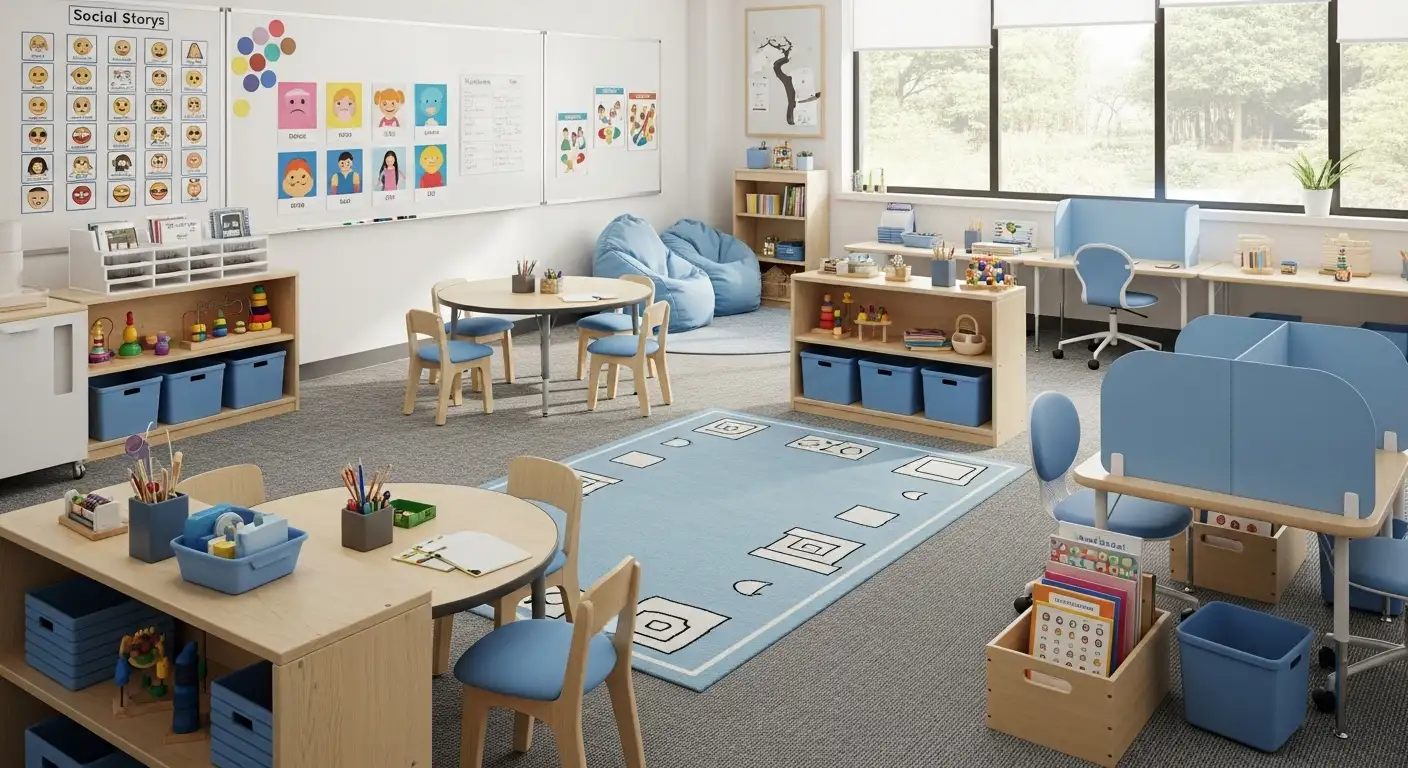
Structured Teaching, developed within the TEACCH model, is designed to support children with autism by creating highly organized learning environments. It encompasses several crucial components:
- Physical Structure: The classroom or learning space is arranged to clearly define areas for specific activities, minimizing distractions and aiding navigation.
- Visual Schedules: These provide children with clear, pictorial representations of their daily tasks and activities, fostering independence by making expectations visible.
- Work Systems: These are organized frameworks detailing what work is to be done, how much, and where completed tasks should go, helping guide the learner through activities.
- Visual Structure: Use of visual cues and prompts throughout instruction to clarify tasks and reinforce routines.
How Do These Strategies Enhance Predictability and Reduce Anxiety?
Children on the autism spectrum often experience stress with unpredictability and changes. Structured Teaching addresses this by establishing clear routines and visual cues, which reduce confusion and uncertainty. Predictable environments help children feel safe and supported, which can increase engagement and learning readiness. Visual supports serve as constant reminders of what to expect, thereby easing transitions and minimizing anxiety associated with new or complex tasks.
How Are These Methods Applied Across Settings and Curriculum Areas?
Structured Teaching strategies are versatile and can be implemented not only within classrooms but also in homes and community settings. They support teaching of various skills including reading, communication, social interactions, and daily living activities. Educators and caregivers can adapt physical arrangements and visual supports to match individual needs and curriculum goals. This flexibility ensures that learners receive consistent, individualized support throughout their environments, promoting generalization of skills.
By integrating physical organization, visual schedules, and systematic work frameworks, Structured Teaching creates an empowering and predictable space for children with autism to thrive academically and socially.
The Role of the TEACCH Model in Supporting Reading and Comprehension
Understanding Autism’s Impact on Learning and Behavior
Autism spectrum disorder (ASD) uniquely influences how children process information, especially in areas like reading and comprehension. The TEACCH (Treatment and Education of Autistic and Communication related handicapped Children) model recognizes these differences by emphasizing structured teaching that addresses common challenges such as auditory processing difficulties, imitation delays, motivation issues, and organizational challenges. This understanding allows educators to create environments that cater specifically to how autistic learners think and interact.
Partnering with Families and Individualized Assessment
A cornerstone of the TEACCH approach is active collaboration with families alongside individualized assessment. This partnership ensures that interventions are tailored to each child's strengths and needs, including how they handle academic tasks like reading comprehension. By situating the child within their broader support network, the model fosters consistency and helps generalize skills across settings.
Focus on Communication, Social Skills, and Academic Development
TEACCH Structured Teaching supports not only academic skills but also communication and social development, areas often related to reading comprehension difficulties in children with ASD. By integrating predictable routines, visual supports, organized classroom spaces, and clear work systems, it scaffolds skills like understanding narrative structures and making inferences. This holistic focus positively impacts children's ability to engage with text meaningfully, promoting better comprehension alongside decoding abilities.
Incorporating The Incredible Years Program for Holistic Literacy Support
Evidence-based structured routines and visual supports
The Incredible Years program is a well-established, evidence-based approach designed to support children with autism, especially in literacy development. A central feature of the program is its focus on creating structured routines and using visual supports to foster engagement and independence. This includes organized environments that reduce anxiety and help children anticipate activities, which is essential for enhancing reading and language skills.
Training for teachers and parents
The program provides comprehensive training resources for both educators and parents. This training emphasizes the importance of collaboration and consistency across home and school environments. By equipping teachers and parents with strategies such as the use of visual aids, clear instructions, and positive reinforcement, the program ensures a supportive framework that nurtures children's communication and literacy growth.
Promotion of language development and social-emotional skills
Beyond literacy, the Incredible Years program actively promotes key social-emotional skills crucial for reading comprehension. It incorporates modules targeting language development, social interactions, emotion literacy, and self-regulation skills. Materials like DVDs, manuals, visual aids, and puppets are incorporated to make learning interactive and relatable. By joining children's interests and activities, described as 'getting into the child's spotlight,' the program enhances social communication, laying the foundation for better understanding and engagement with texts.
Together, these components create a holistic intervention framework that not only addresses the linguistic deficits common in children with autism but also supports their overall development, making literacy learning a more comprehensive and effective experience.
Practical Strategies: Sensory-Friendly Environments and Transition Supports

Importance of sensory accommodations in reading groups
Children with autism spectrum disorders often benefit from sensory-friendly environments that reduce distractions and sensory overload. Creating calm, organized reading spaces helps these children maintain focus and engagement during reading activities. Sensory accommodations can include quiet areas, dimmed lighting, and noise-reducing measures, which collectively support better concentration and learning outcomes.
Use of visual schedules and positive reinforcement
Visual schedules are an effective tool in promoting predictability and reducing anxiety for children with ASD. By clearly outlining the flow of reading groups or classroom routines with images or icons, students can anticipate what to expect, which enhances their comfort and participation.
Positive reinforcement techniques, such as stickers or verbal praise, encourage desired behaviors and motivation. These methods are integral to programs like "Friends on the Block" and TEACCH’s Structured Teaching, where behavioral supports complement academic learning. Reinforcement helps sustain students' engagement and confidence as they improve their reading and language skills.
Techniques for preparing students for transitions
Transitions between activities or settings can be challenging for autistic children due to difficulties with change and unpredictability. Strategies such as advance warnings, countdowns, and the use of visual cues can ease these shifts. Providing sensory-friendly transition spaces and incorporating familiar routines reduces stress and supports smoother movement from one task to another.
Engaging students in these practical strategies fosters a supportive learning environment that maximizes the benefits of reading interventions. Sensory accommodations, visual supports, and positive behavioral techniques work together to improve independence, participation, and academic progress in children with autism.
Tailoring Reading Materials to Interests and Needs in Autism
Use of Relatable and Interest-Based Books
Children on the autism spectrum often engage more deeply when reading materials resonate with their personal interests. Programs like 'Friends on the Block' utilize books that connect with the child's experiences and preferences, which fosters motivation and facilitates better comprehension. Tailoring content in this way helps children relate to the text, promoting more active participation and enjoyment.
Integration of Visual Aids and Behavior Supports
Visual supports such as checklists and stickers play a crucial role in creating structured and predictable reading sessions. These aids help children stay focused and understand the sequence of activities, reducing anxiety and increasing their ability to complete tasks. Incorporating such tools within reading programs provides clear cues and celebrates progress, supporting positive reinforcement.
Benefits for Engagement and Vocabulary Growth
Combining interest-based reading with visual and behavioral supports leads to higher engagement levels, essential for vocabulary acquisition and comprehension development. Shared reading activities paired with targeted discussions and helper text encourage children to explore new words in meaningful contexts, strengthening both word recognition and oral language skills. This holistic approach not only enhances reading confidence but also helps bridge gaps in understanding narrative and abstract concepts.
Shared Reading Activities to Stimulate Language and Comprehension
Incorporating Warm-up Routines and Learning Games
Shared reading sessions often begin with warm-up activities designed to prepare children for learning by activating prior knowledge and focusing their attention. These routines create a predictable and supportive environment that is particularly beneficial for children with autism spectrum disorder (ASD). Learning games integrated into these sessions provide engaging, structured opportunities for practicing key reading skills such as word recognition and comprehension.
Engaging Students Through Reciprocal Questioning
Reciprocal questioning is an effective strategy to foster active participation during shared reading. Educators ask targeted questions about the text, prompting children to think critically and make inferences. This interactive approach helps address common comprehension difficulties experienced by children with ASD, such as understanding story structure and making meaning beyond individual words.
Supporting Vocabulary Growth and Narrative Skills
To enhance understanding, vocabulary development is emphasized through discussions around the text and the use of "helper text" that highlights new words in a meaningful context. Visual supports and explicit teaching of story components assist children in integrating details into a coherent narrative. This scaffolded approach nurtures both language expansion and narrative comprehension, improving children's ability to engage with and enjoy reading.
These shared reading strategies, when combined, create a supportive framework that meets the unique needs of children with autism. By embedding routines, interactive questioning, and targeted vocabulary instruction, educators can meaningfully enhance language skills and reading comprehension, contributing to greater academic success and engagement.
The 'Friends on the Block' Intervention: A Multi-Component Approach
Program Structure: Warm-Ups, Shared Reading, Learning Games
The 'Friends on the Block' intervention is thoughtfully designed around three main components that support children with autism and intellectual disabilities. It begins with warm-up activities aimed at preparing students for learning by establishing routines and engagement. This is followed by shared reading sessions that encourage interaction through questions to stimulate language use and comprehension. Finally, learning games are incorporated to reinforce word recognition, vocabulary, and reading comprehension in a fun and accessible way.
Visual Aids, Behavior Supports, and Relatable Content
A distinctive feature of this program is its use of visual supports such as illustrated checklists and stickers that help maintain positive behavior and motivation. The reading materials feature relatable, interest-based books tailored to the children's preferences, making reading more enjoyable and meaningful. These visual and behavioral supports provide predictability and structure, which reduce anxiety and increase focus during sessions.
Effectiveness for Children with Autism and Intellectual Disabilities
Research confirms that 'Friends on the Block' effectively improves key literacy skills including word recognition and vocabulary. Both qualitative and quantitative data demonstrate increased language skills and confidence among participants. The program’s multi-component approach, grounded in structured routines and interest-focused content, ensures it meets the diverse needs of children who have complex learning profiles, including autism and intellectual disabilities.
This approach can be embedded into regular classroom activities, offering an accessible method for teachers to support reading development through positive behavior supports, active reading, and vocabulary enrichment.
Embedding Instructional Practices into Everyday Classroom Activities
Integrating Structured Routines and Positive Behavioral Supports
Incorporating structured routines within the classroom fosters predictability and security for children on the autism spectrum. Visual schedules, clear work systems, and behavior supports like checklists and sticker rewards help maintain engagement and reduce anxiety. These tools create an organized learning environment that meets the unique needs of students with autism and intellectual disabilities, encouraging independence and motivation.
Active Shared Reading and Vocabulary Support
Active shared reading sessions serve as a vital component in literacy development for children with autism. Using interest-based books, teachers can stimulate language growth through targeted questioning and discussions, strengthening comprehension skills. Additionally, helper texts and vocabulary-focused dialogues build deeper word understanding, essential for improving reading comprehension.
Applicability Across Various Evidence-Based Programs
These instructional practices—structured routines, positive behavioral supports, and vocabulary-rich shared reading—are adaptable across different research-backed programs such as TEACCH’s Structured Teaching, the Incredible Years, and Friends on the Block. Embedding these strategies into daily classroom activities ensures a consistent, supportive learning experience tailored to children's diverse academic and behavioral needs, promoting progress in both decoding and comprehension skills.
Supporting Language and Reading for Students with Autism and Cognitive Disabilities
What Are the Unique Behavioral and Academic Needs of Children with Autism and Cognitive Disabilities?
Children with autism spectrum disorder (ASD) often present with distinct behavioral and academic challenges that impact their reading and language development. These children may have difficulties integrating details into a coherent whole due to weak central coherence, struggle with making inferences, and face challenges in narrative comprehension. Such challenges necessitate specialized instructional approaches tailored to their unique cognitive profiles.
Why Is Explicit and Systematic Reading Instruction Important?
Explicit and systematic instruction in decoding and language comprehension is crucial for children with autism and related intellectual disabilities. While many of these children can develop strong word recognition skills, they tend to have significant impairments in comprehending text. Systematic teaching methods, including visual supports, structured routines, and scaffolded instruction, ensure clear expectations and reduce confusion, thereby enhancing engagement and learning outcomes.
What Does Research Say About Intensive Interventions for Reading and Oral Language?
Recent studies demonstrate that intensified, evidence-based interventions positively affect reading and oral language abilities in children with autism and intellectual disabilities. Programs like "Friends on the Block" employ a multi-component approach combining warm-up activities, shared reading, and learning games to foster word recognition, vocabulary, and comprehension. Such interventions incorporate behavior supports (e.g., checklists, stickers), visual aids, and interest-based materials to boost motivation and confidence. Research reports improvements not only in language skills but also in children's self-assurance when approaching reading tasks.
Collectively, these findings underscore the importance of structured, engaging, and individualized approaches to teaching language and reading that address both the behavioral and academic needs of children with autism and cognitive disabilities.
Collaborative Efforts: Family and Educator Partnership in Reading Support

Ongoing training and development for educators
Supporting children with autism in reading requires educators to continually adapt to evolving needs. Programs like The Incredible Years emphasize ongoing training through workshops and self-study tools. This continuous professional development equips teachers with strategies such as using structured routines, visual supports, and positive reinforcement, ensuring they can effectively promote language development and social interactions in students.
Family involvement in goal setting and reinforcement
Partnering with families is central to effective reading support. Individualized assessment allows educators and families to collaboratively set meaningful goals for the child's literacy skills. Families reinforce these skills at home by engaging children through shared reading, applying visual schedules, and practicing comprehension strategies. Such collaboration ensures consistency across environments, which is vital for skill acquisition.
Benefits of combined efforts in skill generalization and independence
When families and educators work together, children with autism benefit from greater skill generalization—the ability to apply reading and comprehension skills across settings. This partnership also fosters independence, as consistent reinforcement builds confidence and motivation. Evidence-based programs synthesize these collaborative approaches, improving outcomes by addressing academic and social-pragmatic needs comprehensively.
Towards Inclusive and Effective Reading Groups for Autistic Students
Supporting autistic students in reading groups requires a nuanced understanding of their unique strengths and challenges. Combining evidence-based practices such as Applied Behavior Analysis, Structured Teaching, and programs like The Incredible Years with tailored interventions that focus on comprehension, vocabulary, and narrative skills fosters meaningful literacy development. Attention to sensory needs, individualized materials, and collaborative partnerships with families and educators ensures that autistic learners can thrive in group reading settings. Through comprehensive, flexible, and empathetic approaches, educators can unlock the full potential of autistic students, paving the way for academic success and lifelong engagement with reading.
References
- Teaching Children with Autism to Read for Meaning
- Structured Teaching Strategies for Students on the Autism ...
- Effective Classroom Strategies for Teaching Students with ...
- Planning and Implementing Effective Language and Reading ...
- Applied Behavior Analysis (ABA)
- 6 Benefits of ABA Therapy for Children with Autism
- The Controversy Around ABA
- Statement on Use of Applied Behavior Analysis (ABA) for ...
































































































Attentive Autism Care delivers compassionate, home-based ABA therapy, offering personalized support to help children with autism thrive and achieve their best.
