

Traveling With Autistic Child: Flight and Road Trip Survival Guide
Traveling with autistic child involves planning for transitions, wait times, and safety risks. Use ABA tips, TSA supports, and calm routines to stay steady.
Key Points:
- Traveling with an autistic child becomes easier by breaking trips into predictable steps and rehearsing transitions.
- Use social stories, sensory kits, and visual schedules to reduce surprises and plan calm routines before, during, and after flights or road trips.
- Request TSA and airline support, and build safety plans for separation or sensory stress.
Airports and long drives can feel like a string of unknowns, especially when your child depends on routine, predictable sensory input, or extra time to transition. A missed nap, a loud announcement, or an unexpected line can quickly flip the day. Plenty of parents are in this exact spot, and it helps to treat travel like a set of small, practice-ready steps.
A few focused preparations can lower stress for everyone. You will see flight and road trip plans broken into Before, During, and After checklists, plus practical airport supports you can request, and safety steps that travel well.
Flying While Traveling With Autistic Child: What To Prep First?
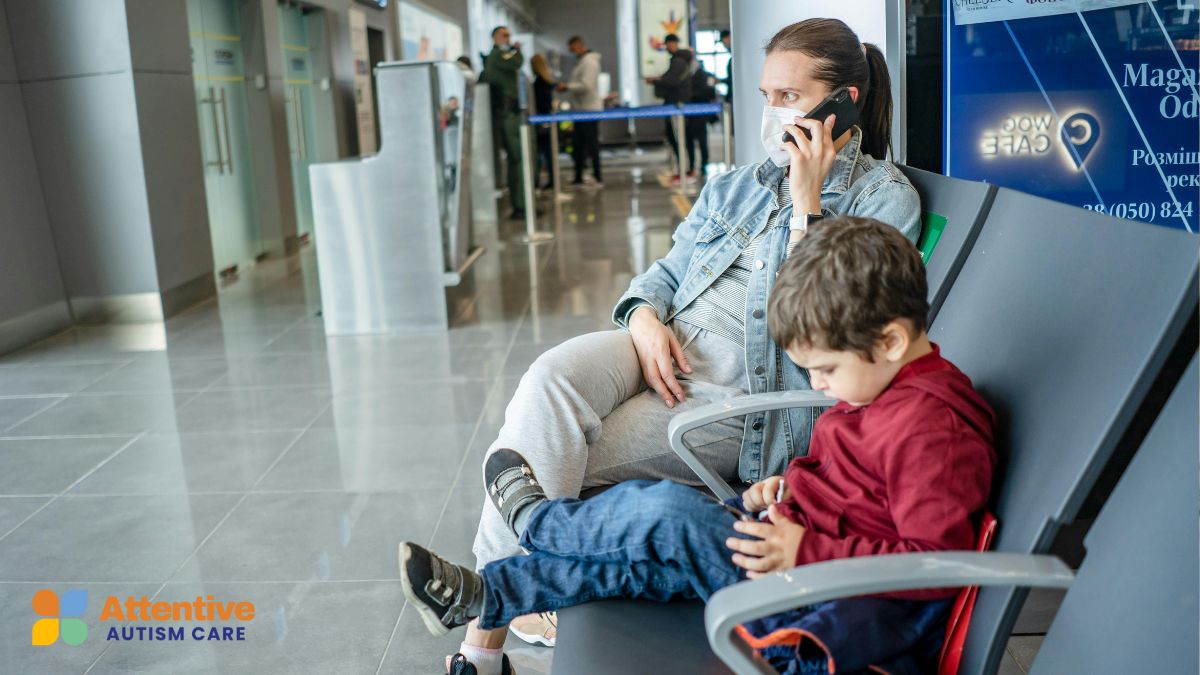
Crowded terminals run on noise, lines, and quick instructions. A smoother flight usually starts by reducing “new” at the airport, so your child meets fewer surprises at once. Time cushions help more than people expect. TSA is screening around 2.48 million travelers per day in 2025, so lines and pacing can shift even on regular days.
A simple “travel script” also helps you stay calm. Pick two to three phrases you will repeat the same way, such as “First security, then snack,” or “Hands on tummy, feet on floor.” Predictable language lowers the number of decisions you need to make in the moment.
Before (Practice + Plan):
- Call TSA Cares in advance to ask what screening may look like and to request support at the checkpoint. TSA asks for contact at least 72 hours before departure.
- Run a home “mini-airport” practice using a backpack, a pretend ID check, and a short wait, then reward the effort.
- Choose one regulation tool for waiting, such as a timer, a “first then” card, or a simple checklist on your phone.
- Pick seats with your child’s triggers in mind, like aisle access for movement breaks or window views for visual calming.
- Decide on your plan for challenging moments such as stepping out of line, using a calm phrase, or switching caregivers for two minutes.
During (Security + Boarding + Air Time):
- Ask for clear, one-step directions from staff when possible, like “Shoes off,” then pause, then “Bag on belt.”
- Use your sensory kit early instead of waiting for escalation, especially in loud queues.
- Keep transitions visible by saying the next step before it happens, such as “After the scanner, we get water.”
After (Arrival + Recovery):
- Schedule decompression first, even if it is 20 minutes in a quiet corner, the car, or a calm gate area.
- Hold off on extra errands if you can, since the most challenging part can hit after the effort is over.
- Reset with a familiar routine like the same snack, the same short show, or the same bedtime sequence.
Social Story Steps for Traveling With Autistic Child at the Airport
Social stories work best when they match the exact order your child will live through. Keep it short, concrete, and paired with pictures of your child, your airport, or simple icons.
A basic story can follow four chapters:
- Security: “We will wait in line. A worker may ask us to remove items. My body stays with my grown-up.”
- Gate: “We will sit. We can eat, drink, and use headphones. We can walk in a small area if we stay close.”
- Boarding: “We will show our ticket. We will walk onto the plane. We will find our seats.”
- Takeoff and Landing: “My ears may feel funny. I can chew, sip, or swallow. My body stays buckled until the grown-up says it is time.”
Practice the story in tiny reps. Two minutes a day is enough at first, then extend the “wait” part by seconds.
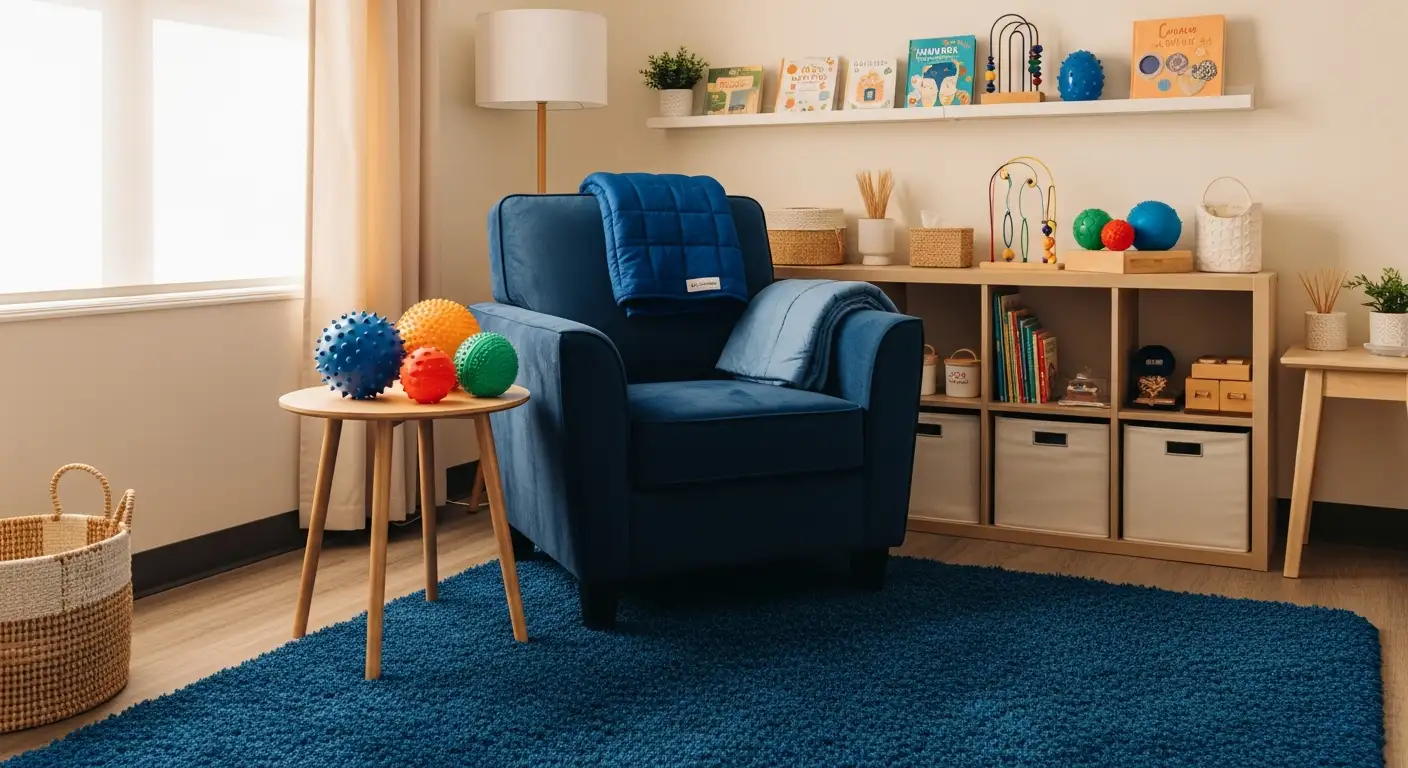
Sensory Kit Packing List (Small, Predictable, Familiar):
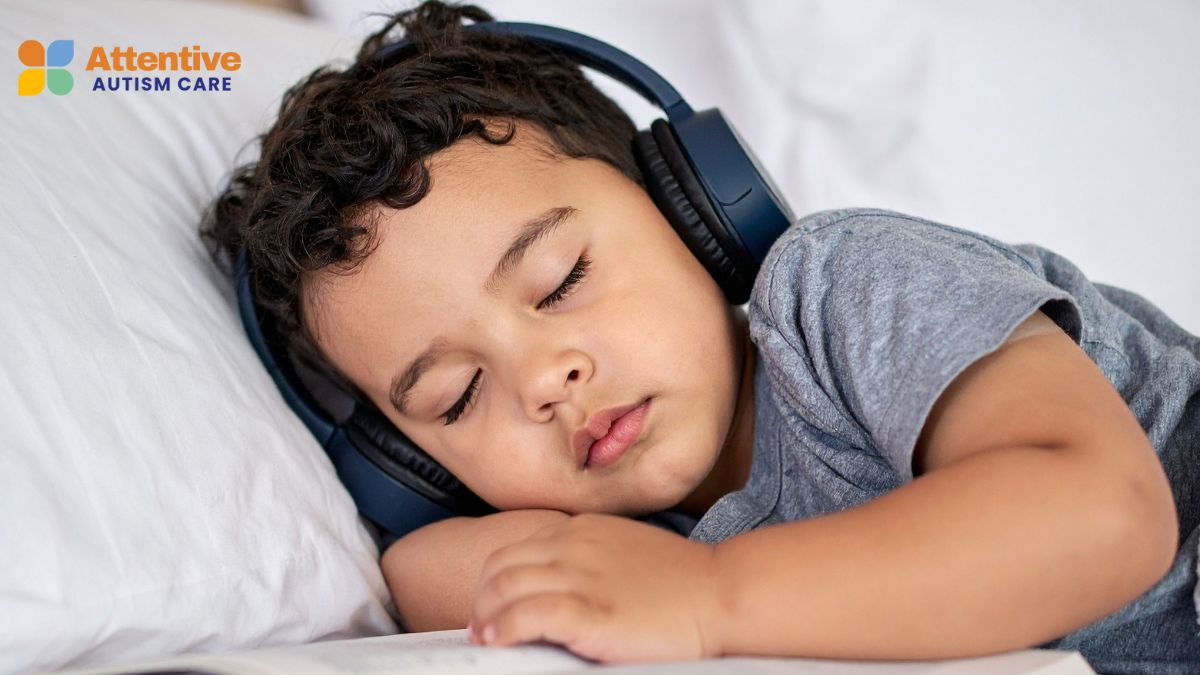
- Hearing support, like child-safe earmuffs or noise-reducing headphones.
- Oral comfort items like gum, chewy snacks, or a straw cup for swallowing during pressure changes.
- Fidget options include a textured strip, a pop toy, or a small hand grip.
- Visual calm tools like sunglasses, a cap, or a small hoodie.
- Comfort cues like a familiar scent on a cloth, a tiny blanket, or a photo card.
TSA Cares is worth using if screening is a stress point. It exists to support travelers with disabilities and medical conditions through the checkpoint process.
Road Trips With an Autistic Child: What Keeps the Car Ride Steady?
Road travel has its own advantages. You control stops, sound, snacks, and timing. The hard part is that the ride can feel endless to a child who struggles with waiting, sitting, or transitions. Consistency beats intensity here. Keep the plan simple enough to repeat every travel day without burnout.
One set of autism travel tips that works well is to build the day around predictable “anchors.” Think of anchors as the non-negotiables you protect, like the first snack, the first stop, and the first calm activity.
Before (Set the Ride Up):
- Map fewer, better stops instead of many quick ones, so transitions happen less often.
- Pack a visual schedule with 3 to 5 steps, such as “Car, Stop, Car, Hotel, Sleep.”
- Plan seat comfort with a cushion, foot support, and a backup outfit for sensory comfort.
- Use the proper restraint every time because correct child restraints can reduce fatal injuries by 71% for infants and 54% for toddlers in passenger cars.
During (Drive in Small Wins):
- Start with an easy first hour like calm music, a favorite show, or a familiar toy bin.
- Offer movement breaks on a timer so your child does not have to beg for the next stop.
- Rotate activities with clear endings such as “One song,” “One short episode,” or “Three pages.”
After (Arrive Without a Meltdown Spiral):
- Do a quick body reset with water, the bathroom, and a snack before unpacking.
- Keep demands low at check-in by letting your child hold one familiar item while you handle logistics.
- Rebuild routine fast by using the same bedtime cues you use at home.
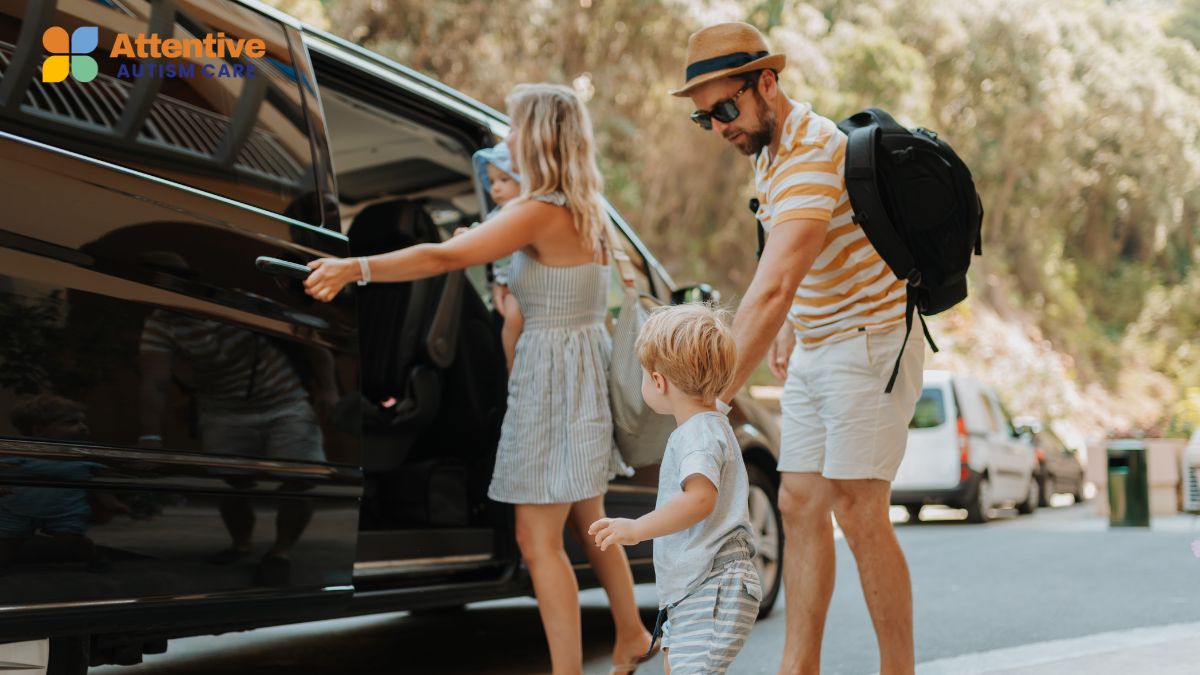
A “stop plan” can prevent the hardest rest-stop moment: the sudden bolt toward a bright sign, a door, or a new space. Decide who holds hands, who watches bags, and where your child stands before the car door opens.
What Airline Supports Can You Ask For Under U.S. Disability Rules?
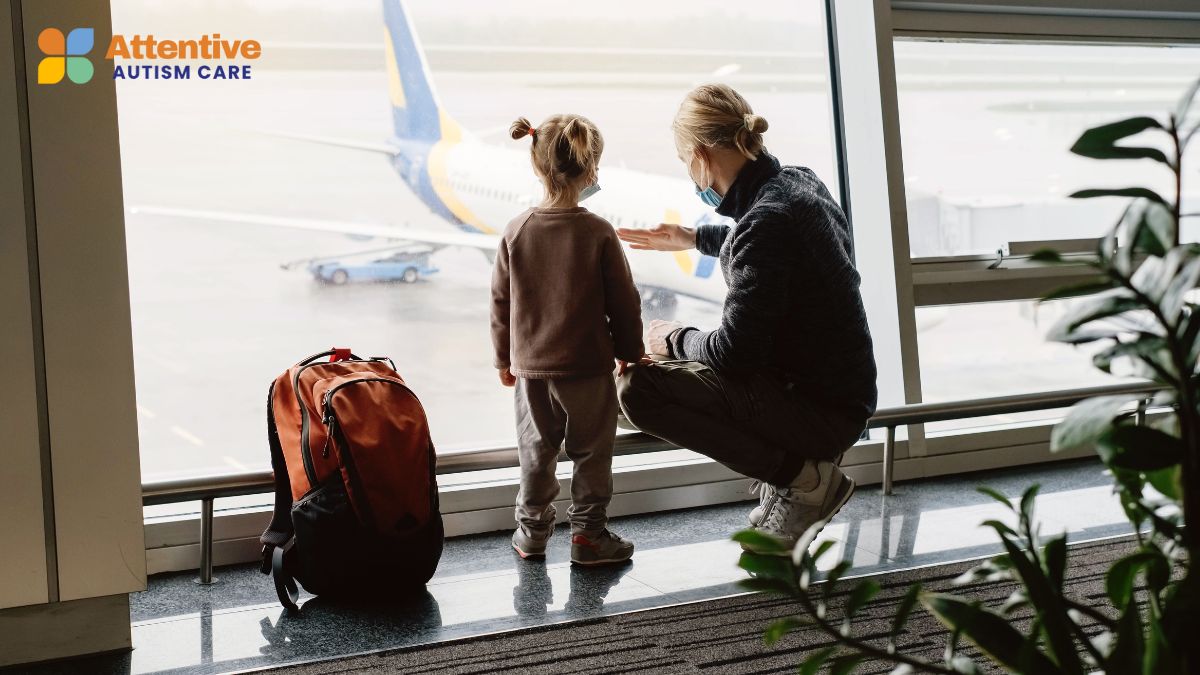
Air travel in the U.S. includes disability protections that apply to flights to, from, or within the United States. The Air Carrier Access Act makes it illegal for airlines to discriminate on the basis of disability, and DOT enforces these rules.
Practical support requests work best when they are specific and calm. A short message helps, such as “My child has a disability and needs extra time and simple directions.”
Common asks that can reduce stress:
- Preboarding so your child can settle before the aisle fills.
- Extra time at the gate without pressure during a boarding rush.
- Seat help when possible so you can keep your child close to a caregiver.
- Clear communication support, like one-step instructions and a moment to process.
TSA Cares is separate from the airline, but it pairs well with airline planning. A call ahead can help you anticipate what screening may involve and reduce last-minute confusion at the checkpoint.
How Can You Build a Safety Plan for Airports and Rest Stops?
Safety planning is not about expecting the worst. Safety planning is about making “if we get separated” a solved problem.
Some children wander quickly when they are anxious, excited, or trying to escape sensory stress. CDC notes that about half of children and youth with autism were reported to wander, and 1 in 4 were missing long enough to cause concern.
Start with identity and fast actions:
- ID bracelet or ID card with your phone number and a short note like “Communication support needed.”
- A current photo saved on each caregiver’s phone, plus one printed copy.
- A simple script for staff, such as “My child is autistic and may not respond to their name.”
- A meeting-point rule like “If separated, we go to the gate agent” or “If separated, we go to the car.”
Airport steps that reduce risk:
- Assign roles so one adult is “child-only” during check-in, security, and boarding.
- Use visual clothing cues, such as a bright hat or matching shirts, so your child stands out in crowds.
- Keep transitions tight by opening the next step before closing the last one, like a snack ready before leaving the gate.
Rest stop steps that reduce risk:
- Park in a predictable spot and, when possible, always exit on the same side.
- Hold a hand rule at the door open so the car door never opens without a hand plan in place.
- Choose fenced or contained areas when available for quick movement breaks.
Small home practice can support these safety steps. Practice “stop and hold hands,” practice “wait by the car,” and practice “show bracelet” in calm moments, then reward the effort.

Frequently Asked Questions
Can TSA allow liquid medication over 3.4 ounces for my child?
Yes, TSA allows liquid medication over 3.4 ounces if it’s medically necessary. Declare it before screening, pack it for easy access, and allow extra time for inspection. Keeping labels or pharmacy documents available can help smooth the process.
Can I request a private screening if my child is distressed at security?
Yes, you can request a private screening if your child is distressed at security. Ask early using the phrase “We are requesting a private screening.” A companion may stay with your child, and staff will need time to set it up; allow extra time in your travel plan.
Can my child use a car seat or CARES harness on the airplane?
Yes, your child can use a car seat or CARES harness on the airplane if it meets FAA approval. Look for the certification label, choose a seat that doesn’t block exits, and check airline policies in advance to avoid issues during boarding.
Get Help Turning Travel Practice Into Real-Life Skills
Travel can run smoother when your child practices waiting, following short directions, and coping with transitions in small, repeatable steps. ABA therapy services in Nebraska, Colorado, Utah, North Carolina, Maryland, and New Mexico can support travel prep by building the exact behaviors that show up at security lines, boarding, rest stops, and long rides.
At Attentive Autism Care, we can help you set a plan that fits your child’s triggers and strengths, including parent coaching you can use before the next trip and during everyday outings that build up to it. Contact us today to learn more.







































































Attentive Autism Care delivers compassionate, home-based ABA therapy, offering personalized support to help children with autism thrive and achieve their best.
