

Autism and Bullying at School: ABA Strategies Every Parent Should Know
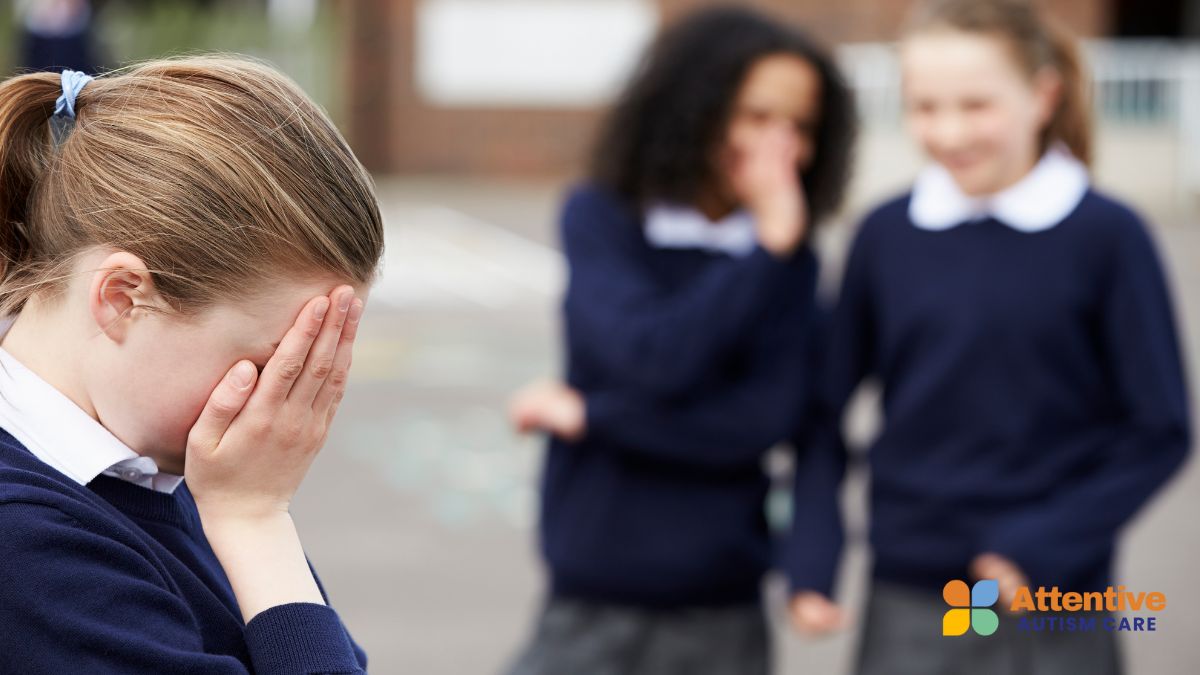
Autism bullying often hides in hallways, lunch, and transitions, leaving kids unsafe. ABA safety steps help parents spot risk early and push school action.
Key Points:
- Bullying of autistic students often goes unnoticed, as it may be mistaken for social misunderstandings or behavioral outbursts.
- ABA therapy offers practical strategies to help autistic children recognize unsafe situations, seek help, and respond safely.
- Key skills include using help-seeking scripts, practicing exit routines, and building calm-down strategies that work in real school settings.
Lunch ends, your child walks into the hallway, and your stomach tightens because you do not know what happened today. A slight change in mood, a ripped worksheet, or “I don’t want to go tomorrow” can feel like a puzzle with missing pieces.
School bullying can look different for autistic kids, and it can also get missed because adults may label it as “social conflict” or “kids being kids.” A plan that focuses on daily safety steps can give you more control over what you can control, even when you cannot be there.

Why Bullying Can Hit Harder for Autistic Students
Bullying in school is common enough that it affects many families, even before you add disability-related risk. In the U.S., about 19% of students ages 12–18 reported being bullied at school in 2021–22.
Middle school often becomes a pressure point because peer groups shift fast, and social rules can change daily. Reports show 26.3% of middle school students reported being bullied, compared with 15.7% of high school students.
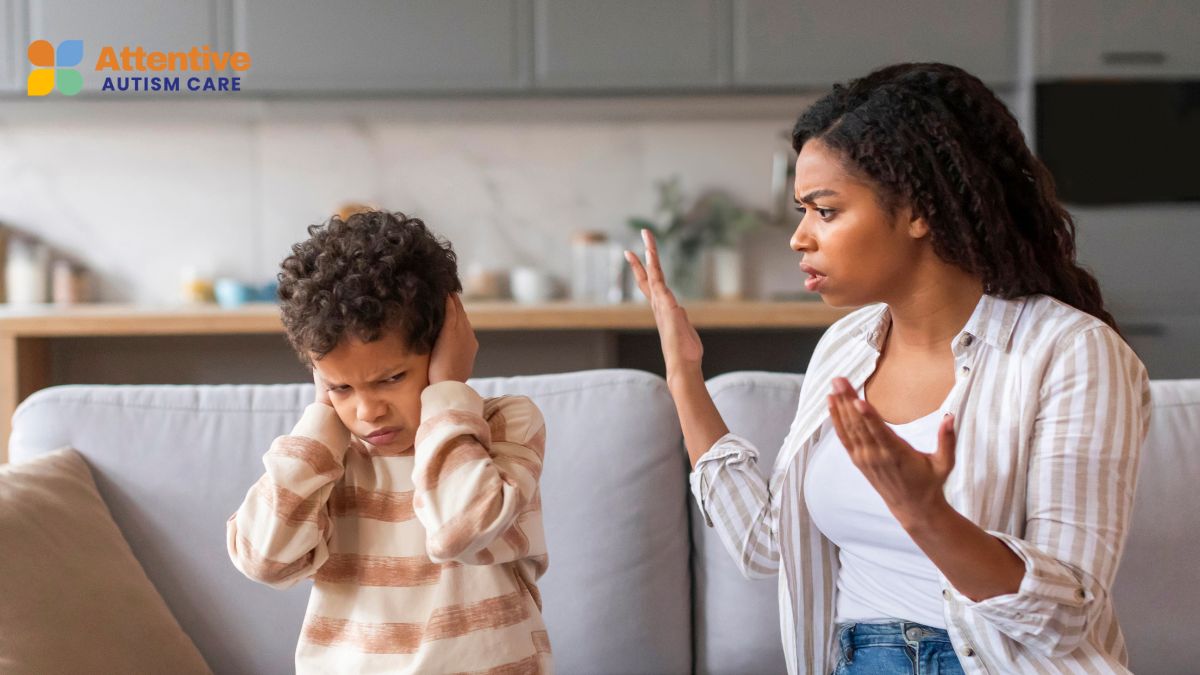
Autistic students can face added risk when differences in communication, sensory needs, or social timing make them stand out. Teasing can also turn into targeted patterns, like baiting a child into a meltdown, copying stims, or taking items that help them stay regulated. A child may freeze, laugh along, or echo words back, which can hide how unsafe the moment felt.
Common school settings where risk rises include transitions, unstructured time, and places with less adult presence. Patterns show up faster when you look for “where” and “when,” not just “who.”
Common bullying patterns parents report seeing:
- Mocking communication differences like speech, tone, or slower responses.
- Provoking a reaction so the child gets blamed for “starting it.”
- Social exclusion games like “You can sit here,” then “You cannot sit here.”
- Taking or damaging supports like headphones, fidgets, or visual schedules.
How Can You Spot Autism Bullying Before It Escalates?
Autism bullying rarely starts with a clear story from your child. Many kids cannot label it as bullying, and some feel shame, fear, or confusion about what “counts.” Instead, it shows up as patterns that look like stress, shutdown, or avoidance.
Changes after school can be the loudest signal. A child may come home “fine,” then melt down during homework. Some kids start refusing preferred activities, asking to stay in the car, or clinging at drop-off. Sleep can change, appetite can change, and stomachaches can become a daily routine.
Online behavior also plays a role, especially for older kids. Among bullied students ages 12–18, 22% reported bullying online or by text in 2021–22. You do not need to prove every detail to take action. You need a consistent way to spot risk early and capture enough detail to help the school respond.
Home signs that deserve a closer look
- Avoidance, like refusing the bus, sure hallways, lunch, or PE.
- Body complaints like headaches or stomach pain that spike on school days.
- Skill loss, like toileting regression, more accidents, or more shutdowns.
- Mood shifts like anger, tearfulness, or “I hate school” out of nowhere.
Autism Bullying Safety Plan: A 10-Minute Daily Check
A short routine can reveal patterns without turning your evening into an interrogation. The goal is to create a predictable “check-in script” that feels safe, then track what you learn.
A simple check works best when it uses choices and concrete prompts. Many kids answer better with “Which part was hardest?” than “How was school?” Visual options also help, like pointing to a feelings scale or picking from three picture cards.
A quick daily check you can repeat:
- Time anchor: Ask about “before lunch,” “lunch,” and “after lunch,” one at a time.
- Place anchor: Ask about one location per day, like “hallway,” “bus,” or “playground.”
- Help anchor: Ask, “Did you talk to an adult today when something felt wrong?”
- Next-step anchor: Ask, “What do you want to be different tomorrow?”
What Should You Do in the First 24 Hours After an Incident?
Fast action protects your child and also shapes how seriously the school responds. Waiting often leads to missing details, changing stories, or a vague “we will keep an eye on it” that does nothing.
Safety concerns can affect attendance more than many people realize. In 2023, the share of students who missed school due to feeling unsafe rose to 13%.
A first response works best when it does three things. It documents what you know, it requests specific protection steps, and it sets a short follow-up timeline. Aim for calm, direct language that keeps the focus on safety and access to learning.
Steps to take right away
- Write a same-day record with date, time window, location, and who was present.
- Ask your child for “facts,” not a complete story, such as “Where were you?” and “What words did they say?”
- Email the school in writing to ensure a clear trail and request.
- Request immediate supervision changes in the highest-risk setting while the school investigates.
- Set a check-in date within 3–5 school days, even if the school says it is handled.
Phrases that keep the conversation on safety
- “My child needs a safety plan for the times and places this happened.”
- “Please tell me what steps will be in place starting tomorrow morning.”
- “Please confirm who my child can go to immediately if this happens again.”
Which ABA Skills Reduce Bullying Risk During the School Day?
ABA strategies bullying support tend to work best when they target “what to do next” in real settings, not just social lessons in a quiet room. The goal is practical safety behavior: getting help quickly, exiting early, and using simple scripts that work under stress.
A recent review of research on bullying and autism describes high rates reported in inclusive school settings, including one study citing 75% of autistic students experiencing bullying in that context.
Skill practice should be short, repeated, and tied to real school routines. Many kids need help recognizing “early warning signs” in their bodies, such as heat in their face, tight hands, or a desire to run. Those signals can serve as a cue to use a practiced safety response before things spiral out of control.
ABA-based practice often focuses on replacement behavior. Instead of freezing, yelling, or hitting, the child learns a faster option that gets adult support and reduces risk.
ABA skill targets that support safety:
- Help-seeking scripts like “I need help now” and “Please walk with me.”
- Exit routines, such as moving to a pre-set safe desk, office, or buddy classroom.
- Boundary phrases like “Stop,” “Back up,” and “Do not touch my things.”
- Calm-down steps like breathing with a visual, squeezing a stress ball, or using headphones.
- Repair and recovery routines, like “I am ready to go back” after a break.
Ways to make practice feel real:
- Role-play hallway and lunch moments using the exact words the school will hear.
- Practice with a timer so the script stays short under pressure.
- Reinforce reporting so telling an adult feels rewarding, not risky.

How Do You Work With the School So Safety Changes Actually Happen?
School bullying autism concerns often get stuck when the plan is too general. “We will monitor” is not a plan. “An adult will stand at the hallway corner from 12:05–12:15 for the next two weeks” is a plan.
Meetings go better when you walk in with a short list of requests tied to specific times, places, and behaviors. It also helps to define what “safe” means in observable terms, such as “no contact,” “separated seating,” “adult check-in,” and “safe adult identified.”
School supports can be added through an IEP or 504 plan when appropriate, and a behavior plan can clarify what staff will do during high-risk moments. You do not need to write the school’s policy. You need the actions that protect your child’s access to learning.
School changes that can reduce risk:
- Seating and grouping adjustments that prevent repeated contact with the same peer.
- Structured transitions with a staff escort for the highest-risk hallway or bus line.
- Adult check-ins at set times, like arrival, before lunch, and dismissal.
- Safe-place access that is quick and does not punish the child for leaving.
- Clear reporting routes so your child knows exactly who to tell and where to go.
What to bring to the meeting
- A simple timeline of incidents and locations, even if it is short.
- Your child’s “help script” so staff can reinforce the exact words.
- A request for a written follow-up summarizing what changes were started and when.
How Can You Track Patterns Without Turning Home Into a Full-Time Investigation?
Tracking is proper when it stays simple. You are looking for patterns the school can act on, not perfect data. A light system also protects your child from feeling questioned every day.
A short log can show whether bullying occurs during a specific class, at a specific seat, or during a particular transition. It can also show what happens right before your child escalates, which helps an ABA team teach a safer replacement response.
Use a structure that takes two minutes to fill out. Keep it factual. Focus on time, place, who was nearby, and what your child did next. Add a quick impact rating to see the change over time.
A quick log that stays manageable:
- Date and time window like “12:00–12:20” rather than “sometime at lunch.”
- Locations like the bus, hallway, cafeteria, playground, or group table.
- What happened in simple terms, like “name-calling” or “pushed in line.”
- Your child’s response, like “froze,” “yelled,” “left,” or “told an adult.”
- Adult responses like “moved seats,” “talked to students,” or “no response.”
- Impact rating is on a 1–5 scale based on sleep, mood, or school refusal.
When to share the log:
- Share after a pattern appears, like three similar incidents in two weeks.
- Share before a meeting so the school can prepare supervision changes.
- Share after a new plan starts to confirm whether the change is working.

Frequently Asked Questions
When does bullying become disability harassment that the school must address?
Bullying becomes disability harassment when it limits a student’s ability to participate in or benefit from school, triggering school duties under Section 504 and Title II. Written reports should prompt immediate steps and a plan to restore safe, equal access to education.
Should I request an IEP or 504 meeting after bullying if the school says it is “handled”?
Yes, request an IEP or 504 meeting if bullying affects your child’s learning, behavior, or attendance, even if the school says it’s “handled.” Teams must ensure support remains effective. Bring a timeline and ask for specific steps to protect access during high-risk times and future incidents.
What if cyberbullying happens off campus but shows up at school the next day?
Cyberbullying that happens off campus but affects school the next day can still require school action if it disrupts learning or safety. Document everything, report it in writing, and request protective measures such as seating changes, check-ins, and clear ways for your child to report concerns.
Get ABA Support That Builds Safer School Days
Autism bullying can shrink a child’s world fast, so the plan has to focus on safety actions your child can use the moment things feel wrong. ABA therapy services in Utah, Colorado, North Carolina, Maryland, New Mexico, and Nebraska can support goals like help-seeking, exit routines, and calm-down skills that carry into real school settings.
At Attentive Autism Care, ABA programs can focus on practical school-day skills, plus parent coaching that helps you respond consistently at home. Reach out to us, and let’s build an ABA therapy plan that protects your child’s school access while strengthening the skills that support safer interactions.





















































































Attentive Autism Care delivers compassionate, home-based ABA therapy, offering personalized support to help children with autism thrive and achieve their best.
