

Supporting Autistic Children Through Transitions
Navigating Change: Effective Strategies to Support Transitions for Children with Autism

Understanding the Challenge of Transitions in Autism
Transitions between activities, environments, and life stages can pose significant difficulties for children with autism spectrum disorder (ASD), often triggering anxiety and challenging behaviors. Grasping why transitions are difficult and exploring proven strategies to ease these shifts are essential for parents, educators, and therapists dedicated to supporting autistic children. This article explores evidence-based therapies and practical tools designed to facilitate smoother transitions and foster independence across various settings.
What is Applied Behavior Analysis (ABA) Therapy and Its Role in Supporting Autism
Definition and science behind ABA therapy
Applied Behavior Analysis (ABA) therapy is a scientific approach grounded in learning and behavioral principles designed to assist individuals with autism spectrum disorder (ASD). It focuses on understanding why certain behaviors occur and strategically applying interventions to promote positive behaviors, such as communication and social skills, while reducing challenging or harmful actions. ABA uses techniques like positive reinforcement and task modification to make learning effective and engaging.
Goals and outcomes of ABA therapy
The primary aims of ABA therapy include enhancing communication, socialization, daily living skills, and independence for children with autism. By providing personalized programs tailored to each child’s specific needs, ABA teaches essential skills and teaches children how to handle transitions and self-regulate. Over time, these therapies foster reduced anxiety and improve overall functioning in various environments.
Evidence base and recognition of ABA therapy
ABA therapy has a robust evidence base and is widely recognized by authoritative bodies such as the U.S. Surgeon General and the American Psychological Association. It is effective for individuals of all ages on the autism spectrum—from children to adults—with research supporting significant reductions in problematic behaviors alongside increases in adaptive skills. Modern ABA practices emphasize positive reinforcement and play-based methods to ensure a nurturing therapeutic experience.
Role of ABA in managing behaviors and skill development
ABA employs practical strategies including visual schedules, timers, transition cards, priming with advance warnings, and first-then statements to help children anticipate and smoothly manage transitions between activities. Positive reinforcement motivates children during transitions, while providing choices can give them greater control and reduce anxiety. Collaboration among families, educators, and therapists ensures consistent support across settings, helping children gradually achieve greater independence and confidence.
Table: Overview of ABA Therapy Elements
| Element | Purpose | Description |
|---|---|---|
| Positive Reinforcement | Encourage desirable behavior | Rewarding a child when they successfully complete a task or transition |
| Visual Supports | Reduce transition anxiety | Use of picture charts, timers, and visual schedules to anticipate change |
| Priming | Mental preparation for change | Giving advance warnings about upcoming activities |
| First-Then Statements | Clarify activity sequence | Communicate what happens first and what follows |
| Parent Training | Enhance therapy outcomes | Teaching families strategies to support their child |
Who Provides ABA Therapy and What Qualifications Are Required?
Types of ABA Professionals
ABA therapy is delivered by a team of professionals with different levels of training and credentials, ensuring comprehensive support for children with autism. The primary providers include:
- Board Certified Behavior Analysts (BCBAs): These are highly trained experts who design and oversee ABA intervention plans.
- Board Certified Assistant Behavior Analysts (BCaBAs): They carry out supervised tasks and support BCBAs.
- Registered Behavior Technicians (RBTs): RBTs work directly with clients to implement therapies under supervision.
Education and Certification Requirements
- BCBAs must hold at least a master's degree in behavior analysis or a related field, complete supervised clinical experience, and pass a rigorous certification exam.
- BCaBAs possess an undergraduate certification after completing specific coursework and supervised practice, enabling them to assist BCBAs.
- RBTs complete a minimum 40-hour training program focused on behavior analysis techniques and must pass a competency test to work directly with clients.
Roles and Responsibilities of Providers
- BCBAs are responsible for conducting assessments like the Functional Behavior Assessment (FBA), developing individualized treatment plans, and training staff and families.
- BCaBAs support BCBAs with plan implementation and supervise RBTs.
- RBTs provide hands-on therapy, collect data on client progress, and deliver interventions as prescribed.
Ethical Standards and Ongoing Training
All ABA professionals adhere to strict ethical guidelines established by certifying bodies. Continuous education and training are mandated to maintain certification and ensure the use of evidence-based, respectful, and effective practice. This commitment helps guarantee consistent and high-quality ABA therapy geared toward reducing anxiety, fostering independence, and enhancing skills for individuals with autism.
Structuring ABA Therapy Programs to Meet Individual Needs
How is an ABA therapy program structured and tailored to each individual's needs?
An ABA therapy program starts with a Functional Behavior Assessment (FBA), which is a detailed evaluation performed by a Board Certified Behavior Analyst (BCBA) to understand the reasons behind behaviors and identify the student's unique abilities and preferences.
Following the FBA, an individualized intervention plan is created. This plan outlines specific, measurable goals tailored to the child's developmental stage, needs, and family priorities. Common goals include improving communication, social skills, daily living activities, and behavior management.
The program integrates a variety of techniques such as visual schedules, timers, transition cards, and positive reinforcement to support smooth adjustments between activities. Strategies are customized—incorporating visual cues that many autistic students respond to better than verbal warnings—to reduce anxiety and promote independence.
Family and environmental factors are critical components of the program. Therapists collaborate closely with families and educators to ensure consistency across home, school, and community settings, incorporating routines and materials familiar to the child. This holistic approach enhances the relevancy and effectiveness of interventions.
Progress is continuously monitored through systematic data collection, enabling therapists to modify strategies and goals as the child develops new skills. This dynamic feedback loop ensures the program remains responsive and effective.
By structuring ABA therapy programs with comprehensive assessments, personalized goals, practical techniques, and strong family collaboration, children with autism receive tailored support that fosters skill acquisition and smoother transitions throughout their daily lives.
Why Transitions Are Challenging for Children with Autism
Difficulty with Unknown and Unpredictable Situations
Children with autism spectrum disorder (ASD) typically struggle with situations that are unfamiliar or unpredictable. Transitions inherently involve changes in routines or settings, creating unknown scenarios that can feel overwhelming. This unfamiliarity can trigger significant stress and resistance.
Impact on Anxiety and Behavior
The stress from unpredictable transitions often leads to heightened anxiety. This emotional discomfort can manifest as challenging behaviors, making smooth shifts between activities difficult. Managing this anxiety is crucial for easing transitions and minimizing disruptive responses.
Cognitive Load During Change
Transitions increase cognitive demands on autistic children. Without structured support, the brain must process new information rapidly, increasing the cognitive load. This strain can reduce the child's ability to focus and cope, leading to increased difficulty in adapting to the change.
Sensory and Communication Challenges
Many autistic students face sensory sensitivities and communication barriers. Verbal warnings about time or activity changes are often less effective since processing abstract time concepts can be hard. Visual cues and structured supports help overcome these issues by providing clear, concrete information, reducing confusion and sensory overload during transitions.
Key Transition Strategies to Support Autistic Children
What Are Effective Visual Tools for Transitions?
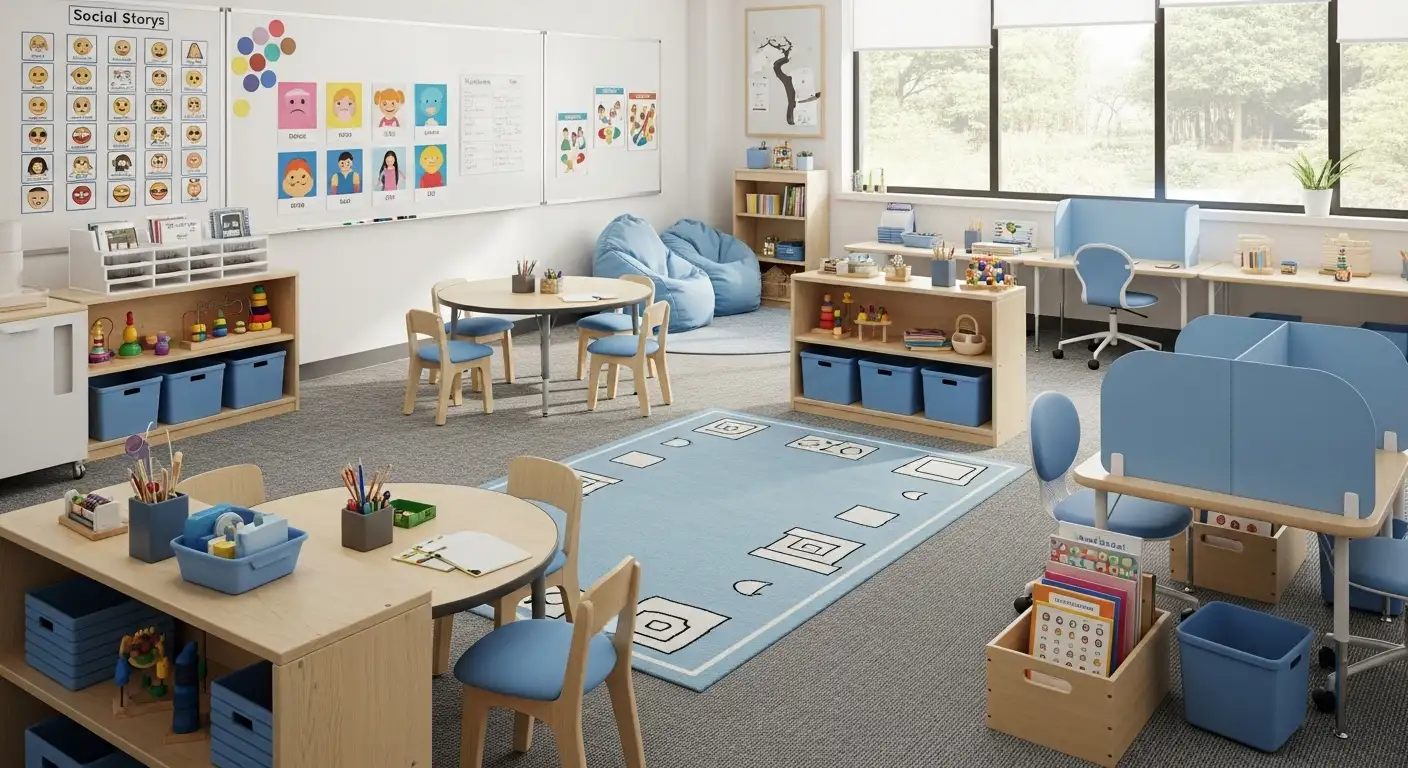
Visual timers and countdowns serve as clear, concrete indicators of when a transition will occur, helping autistic children anticipate the shift with less anxiety. Unlike verbal time warnings, these visual cues are easier for many children with ASD to process, since verbal concepts about time can be challenging.
Visual schedules and transition cards present sequential visual information about upcoming activities. These tools clarify what to expect next and help in mentally preparing the child for changes in routine.
How Do Container or Box Systems Aid Transitions?
Container or box systems organize materials and activities clearly, allowing children to know exactly what they need to focus on or put away during a transition. This structure minimizes cognitive load and supports consistency, which smooths the process.
What Role Do Social Stories and Objects Play?
Social stories describe transitions and social expectations through simple, personalized narratives, reducing uncertainty and promoting understanding. Likewise, using specific objects linked to activities provides tactile and visual preparation cues that can soothe anxiety.
How Does Priming Help in Transition Support?
Priming involves giving advance warnings — either visually, verbally, or both — about upcoming changes. This proactive approach allows the child to prepare mentally, reducing stress and behavioral challenges.
How Can These Strategies Be Combined for Better Outcomes?
Combining visual tools (timers, schedules), priming, and tangible supports (transition cards, boxes, social stories) creates a comprehensive system tailored to each child's needs. This blend encourages independence and self-regulation, fostering smoother transitions across school, home, and community settings.
The Importance of Visual Supports Over Verbal Cues
Why visual cues work better for many autistic children
Children with autism spectrum disorder (ASD) often find it challenging to process verbal concepts about time. This difficulty makes verbal warnings about transitions less effective. Visual supports provide concrete and clear information, which many autistic students can understand and anticipate more easily than spoken words.
Examples of visual supports
Common visual aids include visual timers, countdowns, and visual schedules. Transition cards and container or box systems also serve as tangible signals that prepare students for upcoming changes. These tools help convey the sequence and duration of activities visually.
Difficulties with verbal concepts of time
Verbal time warnings require abstract thinking skills, which can be hard for autistic children to grasp. Phrases like "in five minutes" may not be meaningful without visual reinforcement. This gap often leads to confusion or resistance during transitions.
Reducing anxiety through visual communication
Providing warnings before transitions using visual cues can mentally prepare autistic students, lowering anxiety levels and reducing challenging behaviors. Structured routines combined with consistent visual supports minimize cognitive load, thereby facilitating smoother shifts between activities.
Visual communication is thus a critical component in helping autistic children navigate daily changes with greater ease and confidence.
Incorporating ABA Techniques Specifically for Transition Support
How is positive reinforcement used during transitions?
Positive reinforcement is a crucial ABA strategy that encourages smooth transitions by rewarding desirable behaviors. When a child successfully shifts from one activity to another, providing praise or tangible rewards helps reinforce that behavior, making it more likely to occur again. This technique supports not only compliance but also reduces the anxiety that can accompany changes.
What are first-then statements and how do they help?
First-then statements clearly outline the sequence of events, for example, “First we clean up, then we read a book.” This direct communication aids children with ASD in understanding what to expect next. By simplifying the transition, these statements reduce uncertainty and increase cooperation.
What is priming and why is it important before changes?
Priming involves giving advance warnings about upcoming transitions using verbal or visual cues. This preparation helps children mentally ready themselves for change, lessening anxiety and resistance. Tools like countdowns or visual timers are often used to implement priming effectively.
How can providing choices ease the transition process?
Offering choices during transitions, such as letting the child pick which book to read next, gives them a sense of control over their environment. This empowerment decreases feelings of unpredictability and increases willingness to move through transitions.
What role does ABA play in developing self-regulation and independence?
ABA aims to teach children to manage transitions independently over time. By systematically applying strategies like priming and reinforcement, children gradually build self-regulation skills. This growth promotes greater independence both in school and other settings, improving overall quality of life.
Together, these ABA techniques create structured and supportive environments that make transitions less stressful and more manageable for children with autism.
Consistency, Routine, and Environmental Structuring to Facilitate Transitions
Maintaining consistent routines and materials
For students with autism, consistent routines and familiar materials create a stable framework that eases the stress of shifting between activities. Consistency reduces surprises and helps students predict what happens next, making transitions less intimidating.
Minimizing cognitive load
Structuring the environment to minimize cognitive demands is crucial. Simplifying choices, organizing materials clearly, and reducing distractions help students focus on the transition itself rather than feeling overwhelmed by too much information.
Planning activities in advance
Effective transition support starts with thoughtful planning. Mapping out the sequence of activities ahead of time and sharing this plan through visual schedules or cards allows students to prepare mentally and reduces confusion during transitions.
Monitoring anxiety and dysregulation signs
Educators and caregivers should watch for any early signs of anxiety or emotional dysregulation during transitions. Recognizing these signals early allows prompt intervention to support the student’s emotional state and maintain smooth transitions.
Role of collaboration with families and educators
Consistent communication and teamwork between families, educators, and therapists ensure that strategies are applied uniformly across home and school environments. This collaboration helps reinforce routines, provides stability, and promotes the student’s independence in managing transitions.
Together, these practices build a supportive environment that not only facilitates smoother transitions but also fosters greater self-regulation and confidence in students with autism.
Preparations for Major Transitions: Educational and Life Stage Changes
How can preparations support transitioning between grade levels and schools?
Transitions such as moving between grade levels or changing schools can be challenging for students with autism spectrum disorder (ASD). Many individuals with ASD find unknown and unpredictable situations to be anxiety-provoking, potentially leading to increased challenging behaviors during these times. To ease this process, early and thorough preparation is essential.
What role do early planning and team meetings play?
Early planning involves organizing support well before the transition occurs. This is best achieved through collaborative team meetings that include educators, families, therapists, and when appropriate, the students themselves. These meetings allow for establishing clear, individualized goals and strategies to support the student's needs during the forthcoming change.
How do visits to new environments help?
Practical exposure to the new school or grade level environment is vital. Visits to the new facility familiarize students with the physical layout, key staff members, and daily routines, reducing the fear of the unknown. Such exposure can be combined with walkthroughs of expected schedules to provide visual and experiential familiarity.
What is the significance of social narratives and stories?
Social narratives, or social stories, are carefully crafted explanations of what students can expect during the transition. These narratives often incorporate pictures or visual cues to outline the sequence of events and expected behaviors, which helps students process the change cognitively and emotionally.
How is support structured for transition from high school to adulthood?
The transition from high school to adult life is a major life stage change that requires early and comprehensive planning. Collaborative goal-setting involving the student, family, educators, and professionals is critical. Areas of focus include:
- Employment opportunities
- Post-secondary education
- Community living arrangements
- Development of independence and daily living skills
Schools play a significant role by offering work experiences, social skills training, community-based learning, and supports that prepare students for adult life challenges.
Overall, structuring these preparations with individualized, evidence-based strategies can greatly reduce anxiety and support smoother adjustments during major transitions for individuals with autism.
Role of the School and Community in Transition Support
Work experiences and vocational training
Schools play a crucial role in preparing autistic students for adult life by providing varied work experiences and vocational training opportunities. These programs help students develop job skills in controlled, supportive environments, increasing their readiness for employment after graduation.
Social skills development
Social skills training is another important aspect offered in schools, often delivered in group settings. This training focuses on improving peer relationships, understanding nonverbal cues, and managing everyday social challenges, all of which are essential for successful community integration.
Daily living skills support
Support for daily living skills, such as personal care and money management, is provided to promote independence. Schools incorporate training in essential tasks, helping students build routines that reduce anxiety around transitions and prepare them for community living.
Community-based training and integration
Community-based training allows students to practice learned skills in real-world settings. This includes supervised excursions, public transportation training, and participation in community events, which facilitate smoother transitions by increasing familiarity and comfort with new environments.
Collaboration with families and therapists
Effective transition support depends on collaboration among schools, families, and therapists. Team meetings and coordinated goal-setting ensure consistency in strategies and help tailor interventions to meet individual needs. This holistic approach supports students across environments, enhancing their confidence and skills for life after school.
Early Intervention and Its Long-Term Benefits for Transition Readiness
Why start therapies before age 3?
Beginning autism therapies early, ideally before age 3, is fundamental to maximizing positive outcomes for children with ASD. Early intervention takes advantage of critical developmental windows, allowing children to develop essential skills when their brains are most adaptable.
How does early intervention impact social, communication, and daily living skills?
Early Intensive Behavioral Intervention (EIBI) and related methods like the Early Start Denver Model (ESDM) focus on skill acquisition in natural settings to enhance social interaction, communication, and daily living skills. These therapies utilize Applied Behavior Analysis (ABA) principles, rewarding positive behaviors and addressing challenges in a supportive, structured way.
Are the benefits sustained across different life stages?
Evidence shows that children who receive early intervention maintain gains in communication, socialization, and independence into adolescence and adulthood. This sustained progress contributes to smoother transitions at school, in community living, and eventually in employment.
What specific models support early intervention?
EIBI is designed primarily for children under 4, providing intensive, individualized behavioral therapy. ESDM targets toddlers by embedding learning into typical routines. Both are evidence-based, endorsed by professionals, and aim to build foundational skills that support managing changes and transitions throughout life.
Starting therapies early sets the stage for lifelong success by building the skills autistic individuals need to thrive and adapt across various environments and stages.
Building Bridges Through Transitions
Supporting children with autism through transitions requires a thoughtful blend of evidence-based therapies like ABA, individualized planning, and consistent use of visual and behavioral strategies. Early and collaborative intervention promotes not only smoother changes between activities and environments but also fosters autonomy and reduces anxiety over time. With coordinated efforts across families, educational settings, and therapy providers, autistic children can develop the skills and confidence to successfully navigate transitions, opening pathways to greater independence and participation in everyday life.
References
- Transition Strategies for Autistic Students in the Classroom
- Autism Therapy Types & Interventions
- How ABA Therapy Can Help Autistic Children Manage ...
- Transition Planning for Students with Autism Spectrum ...
- ABA Certification Explained: RBT, BCaBA, BCBA, BCBA-D
- Your Complete Guide to Becoming an ABA Therapist
- 6 Benefits of ABA Therapy for Children with Autism
- Applied Behavior Analysis (ABA)
- The effectiveness of applied behavior analysis program ...
- The Future of Autism and ABA: Predicting Outcomes
































































































Attentive Autism Care delivers compassionate, home-based ABA therapy, offering personalized support to help children with autism thrive and achieve their best.
