

How to Use Visual Prompts to Support Autism Learning
Harnessing the Power of Visual Prompts to Enhance Learning for Children with Autism

Visual Tools Transforming Autism Education
Visual prompts are an increasingly recognized approach in supporting the learning and development of children with Autism Spectrum Disorder (ASD). Their use spans communication enhancement, cognitive development, behavioral management, and emotional regulation. This article explores the multifaceted role of visual strategies—ranging from structured behavioral therapies to everyday educational tools—in fostering greater understanding and independence for neurodivergent learners. Drawing on recent studies and evidence-based practices, it offers insights into how visual aids can be effectively integrated into autism therapy and learning programs.
Understanding ABA Therapy and Its Visual Components
What is applied behavior analysis (ABA) therapy and how is it used in treating autism?
Applied Behavior Analysis (ABA) therapy is a science-driven method used widely to support individuals with Autism Spectrum Disorder (ASD). It applies principles of learning and behavior to develop new skills, reduce problematic behaviors, and enhance overall functioning. ABA professionals analyze the triggers, behaviors, and outcomes (antecedents, behaviors, consequences) to tailor interventions.
ABA is customized to focus on areas such as communication, social skills, daily living, and academics. It uses positive reinforcement techniques to encourage desirable behaviors. Qualified therapists create individualized plans and track clients' progress closely.
Role of visual prompts in ABA
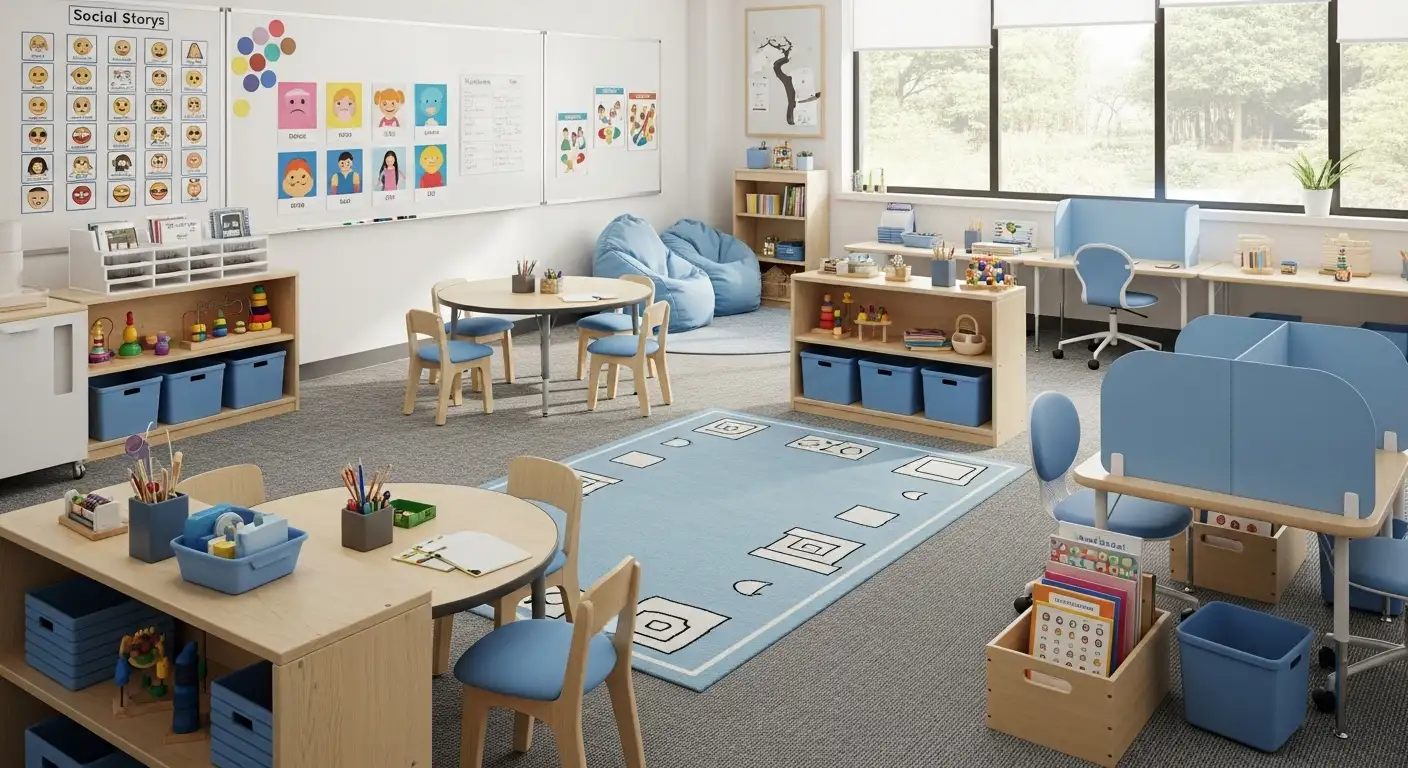
Visual prompts are a critical element within ABA therapy, enhancing comprehension and communication for ASD individuals. These aids include flashcards, picture schedules, symbols, and social stories. They help clients better understand instructions, follow routines, and grasp social norms by making abstract concepts concrete and visible.
Visual supports also reduce anxiety by providing predictable structures. For example, visual schedules outline daily activities clearly, aiding independence and easing transitions.
Tailoring ABA for autism
ABA therapy adapts to the unique needs of autistic clients by incorporating their interests and offering additional time for communication. Visual aids are consistently used to explain concepts and processes. Therapists often involve caregivers to support generalization of skills at home, ensuring interventions extend beyond therapy sessions.
This individualized use of visual components helps clients navigate their social and learning environments more effectively, building confidence and reducing misunderstandings common among those with autism.
Who Provides ABA Therapy and Their Qualifications

Roles of ABA Professionals
Applied Behavior Analysis (ABA) therapy is administered by a range of trained professionals including Board-Certified Behavior Analysts (BCBAs), Registered Behavior Technicians (RBTs), and licensed therapists. Each plays a distinct role: BCBAs oversee program design and evaluation, RBTs implement daily interventions, and licensed therapists may integrate ABA with other therapeutic approaches.
Educational and Certification Requirements
To become an ABA therapist, individuals typically pursue undergraduate and graduate degrees in psychology, education, or related fields. After completing supervised fieldwork, candidates earn certification such as the BCBA credential. This certification requires demonstrated expertise in behavior assessment, intervention planning, positive reinforcement strategies, and rigorous data collection.
Importance of Training and Ethical Standards
Professional training ensures ABA providers deliver evidence-based and individualized interventions. They follow strict ethical guidelines emphasizing client well-being, respect, and collaboration with families and educators. Continuous professional development keeps therapists updated on emerging research and best practices, vital for effective treatment outcomes.
Through these qualifications and roles, ABA professionals ensure therapy is personalized, effective, and ethically sound, contributing to meaningful progress for individuals with autism spectrum disorder and related conditions.
Key Benefits of ABA Therapy Enhanced by Visual Supports
How does ABA therapy improve communication and social skills?
ABA therapy, particularly when enhanced with visual supports, significantly boosts communication and social skills among individuals with autism. Visual aids such as flashcards, picture symbols, and social stories help make abstract social cues and language more concrete and understandable. This approach is especially beneficial for nonverbal children or those with limited language, enabling clearer expression of needs and better recognition of others' emotions and intentions. By incorporating personalized visual supports into therapy, learners become more engaged and can generalize social skills across different settings.
How does it help reduce challenging behaviors?
ABA focuses on increasing desirable behaviors and decreasing challenging ones through positive reinforcement. When paired with visual strategies like schedules and cues, it offers clear expectations and routines, which minimize anxiety and reduce incidents of avoidance, social phobia, or compulsive behaviors. Visual schedules help predict daily activities, decreasing behavioral outbursts caused by uncertainty. Additionally, behavior tracking with visual thermometers or monitoring tools provides immediate feedback to learners and therapists, further supporting behavior regulation.
In what ways does ABA promote independence and enhance quality of life?
Promoting independence is a central goal of ABA therapy, achieved through systematic teaching of daily living skills supported by visual prompts. Visual supports like step-by-step task analyses and structured play groups guide learners in mastering self-care, time management, and problem-solving. This gradual skill-building fosters confidence and autonomy. Moreover, the positive outcomes observed include better global functioning and reduced anxiety, allowing individuals with autism to interact more comfortably in varied environments. As a result, therapy contributes to enhanced self-regulation, social competence, and an improved overall quality of life.
| Benefit Area | Visual Support Tools | Impact on Therapy Outcomes |
|---|---|---|
| Communication & Social Skills | Flashcards, Social Stories, Emotion Cards | Improved understanding, expression, and social navigation |
| Behavior Management | Visual Schedules, Behavior Thermometers | Reduced anxiety and challenging behaviors |
| Independence & Life Skills | Task Analysis, Visual Schedules | Increased autonomy and functional daily living skills |
By integrating visual supports, ABA therapy becomes more tailored to the unique needs of individuals with autism, enhancing engagement and effectiveness across multiple developmental domains.
Customizing ABA Therapy with Visual Strategies for Autism
How is ABA therapy tailored to meet the individual needs of clients with autism?
Applied Behavior Analysis (ABA) therapy is carefully customized for each individual with autism by conducting thorough assessments to identify their unique strengths, challenges, and interests. This information guides the creation of personalized behavior intervention plans that focus on replacing problematic behaviors with functional alternatives that suit the client’s needs.
The role of visual aids in goal-setting and assessment
Visual aids play a central role in customizing ABA therapy. Tools such as visual schedules, prompts, and personally meaningful symbols are integrated into sessions to enhance communication and understanding. These supports help clients anticipate daily routines, comprehend instructions more easily, and track progress toward goals. Additionally, data collection methods using visual tools assist therapists in monitoring how well interventions work and where adjustments are needed.
Involving families and educators for consistency and success
Family members and educators are essential partners in the therapy process. Engaging them ensures that the therapeutic techniques and visual supports are consistently applied across home, school, and community settings. Training parents and teachers to use these visual strategies helps generalize skills beyond therapy sessions, ultimately improving the client’s functional skills and quality of life.
The collaborative, data-driven, and visually supported approach in ABA therapy helps create a responsive and effective intervention tailored to each client's evolving needs.
Common Visual Techniques and Strategies in ABA Therapy
What are common techniques and strategies used within ABA therapy?
Applied Behavior Analysis (ABA) therapy leverages several techniques to improve behaviors in individuals with autism.
One foundational approach is positive reinforcement, where desirable behaviors are encouraged by rewarding them, leading to an increase in those behaviors. Conversely, negative reinforcement involves removing an unpleasant stimulus when a desired behavior occurs, which also promotes that behavior.
Modeling and prompting are key in ABA and often use visual aids to support learning. Modeling demonstrates the desired behavior visually, while prompting nudges the learner toward performing the behavior, often fading prompts gradually to promote independence.
Aided by visuals such as flashcards, visual schedules, and scripts, these strategies become clearer and easier to follow. This clarity supports comprehension and memory, which is particularly useful for those with Autism Spectrum Disorder (ASD).
Behavior chaining breaks down complex tasks into smaller, manageable steps. Each step is visually supported to help learners understand and complete sequences, enhancing skill acquisition.
To reduce unwanted behaviors, extinction is applied by withdrawing reinforcement, making the negative behavior less likely to continue.
Progress in ABA therapy is carefully monitored through data collection. This systematic tracking allows therapists to adjust strategies effectively to maximize outcomes.
Together, these visual strategies and behavior management techniques form a comprehensive approach to teaching and supporting individuals with autism, making learning structured, accessible, and tailored to individual needs.
Visual Therapy Approaches Beyond ABA for Autism Support
How do visual aids enhance communication and social skills in autism therapy?
Visual therapy uses a variety of visual supports—such as flashcards, symbols, and social stories—to improve communication and social understanding in children with autism. These aids help children who are nonverbal or have limited language express their needs more clearly and better comprehend others. Social stories, for example, use illustrated narratives to teach social norms and appropriate behaviors, providing a clear and engaging way for children to navigate complex social situations.
In what ways does visual therapy assist sensory integration?
Visual therapy also plays a significant role in sensory integration by training the brain to respond appropriately to visual stimuli. For children with autism, this can reduce sensory overload and increase comfort in diverse environments. Techniques such as light and color therapy use calming colors like blue or green to help regulate sensory responses, promoting relaxation and diminishing anxiety.
How is cognitive development supported through visual methods?
Cognitive skills including memory, attention, and problem-solving are enhanced through the use of structured visual aids such as flashcards and pictorial representations. Visual schedules provide clear outlines of daily routines, which help reduce anxiety, promote independence, and develop time-management skills. Across therapy sessions, these visual tools make learning more accessible and engaging for children on the spectrum.
Overall, incorporating visual therapy methods offers multifaceted benefits by addressing communication challenges, sensory sensitivities, and cognitive development—all vital for supporting individuals with autism beyond traditional behavioral interventions.
Visual Schedules and Social Stories: Building Routine and Social Understanding

How Do Visual Schedules Provide Structure and Predictability?
Visual schedules offer children with Autism Spectrum Disorder (ASD) a clear, visual outline of daily routines and activities. By representing tasks with pictures or symbols, these schedules help make abstract concepts like time and sequence more concrete and understandable. This structure reduces uncertainty, which can be a significant source of anxiety for children with autism. Visual schedules promote independence by enabling children to anticipate what comes next without relying heavily on verbal instructions.
In What Ways Do Social Stories Teach Social Norms?
Social stories are illustrated narratives designed to explain social situations and appropriate behaviors in a simple, relatable way. They help children with ASD grasp the "invisible" rules of social interaction, such as understanding emotions, interpreting nonverbal cues, and responding appropriately in different contexts. By presenting these norms visually and sequentially, social stories ease the learning process and encourage positive social engagement.
How Do Visual Schedules and Social Stories Reduce Anxiety and Improve Independence?
Both tools reduce anxiety by making expectations clear and manageable. Knowing what to expect helps children feel more secure and less overwhelmed by change or unfamiliar social settings. Visual schedules guide children through their day autonomously, fostering confidence and self-management skills. Social stories prepare children for social situations by demystifying behaviors and responses, which increases comfort and social competence.
These visual supports are essential components of autism interventions, aiding communication, emotional regulation, and functional independence while promoting smoother social integration.
Sensory and Emotional Regulation with Visual Supports

How Does Light and Color Therapy Help Sensory and Emotional Regulation?
Light and color therapy involve using specific lighting and colors to influence sensory responses and emotional states in children with autism. Calming colors such as blue and green are commonly used to reduce anxiety and promote relaxation. These colors can create a soothing environment that helps children feel more comfortable and better able to regulate emotional responses.
What Are Sensory Activities That Assist with Sensory Processing?
Sensory activities play a vital role in helping children with autism who experience over- or under-sensitivity to sensory stimuli. Examples include:
- Fidget toys: Provide tactile input to help focus and calm.
- Sensory bins: Offer a controlled way to explore textures and sensations.
- Slime experiments: Engage multiple senses to encourage regulation and exploration.
These activities aid sensory integration by training the brain to respond appropriately to visual and tactile stimuli, thereby reducing sensory overload.
Which Calming and Self-Regulation Strategies Are Effective?
Several strategies support emotional regulation through visual aids and mindfulness techniques. These include:
- Coloring: Uses focused visual and motor skills to calm anxiety.
- Calm-down cards: Visual cue cards that guide breathing or calming exercises.
- Mindfulness exercises: Visual and verbal prompts to increase awareness and control of emotions.
- Grounding techniques: Use of visual and sensory cues to anchor attention in the present moment.
- Dedicated retreat zones: Visually defined spaces offering a safe place to decompress.
Together, these visual supports bolster emotional regulation by making strategies accessible and engaging for children with autism.
At-Home Use of Visual Tools and Parental Involvement
How are parents trained to generalize therapeutic skills at home?
Parental involvement is crucial for the success of therapy in children with autism spectrum disorder (ASD). Parents are trained to apply visual tools and behavioral strategies learned during therapy sessions in daily life. This training includes learning to use visual schedules, social stories, and visual cues to support communication, social understanding, and routine adherence outside the clinical setting. By coaching parents in these methods, therapists empower families to facilitate consistent practice and reinforce therapeutic goals, enhancing the child's progress.
What role do visual aids play in daily life for children with ASD?
Visual aids help children with ASD understand expectations and navigate social and cognitive challenges by making abstract concepts more concrete. For example, visual schedules provide clear, pictorial representations of daily routines which help reduce anxiety and promote independence. Social stories with illustrated narratives teach social norms and expected behaviors in familiar language and images. Flashcards and visual prompts assist in emotion recognition and communication. These aids make instructions more accessible and easier to remember, supporting smoother transitions and emotional regulation throughout the day.
What are some examples of simple toys and materials used at home for therapy?
Therapeutic activities often incorporate everyday toys and household items, ensuring accessibility and familiarity. Puzzles, building blocks, and dolls align well with children's interests and can be used to practice social skills, problem-solving, and emotional expression. Sensory materials such as fidget toys, sensory bins, and slime assist with sensory integration and emotional regulation. These simple tools complement visual supports and allow parents to engage their children in meaningful, therapeutic play within the home environment, without the need for specialized or expensive materials.
Educator Roles and Evidence-Based Visual Practices in Autism Learning
Why are autism-aware teaching strategies important?
Educators play a crucial role in supporting students with Autism Spectrum Disorder (ASD) by implementing autism-aware teaching strategies. Such strategies promote inclusivity and help meet the diverse learning needs of autistic students. Incorporating students' special interests and establishing predictable classroom routines create a supportive environment that encourages engagement and reduces anxiety. Additionally, professional development focused on autism increases educators' understanding and equips them with effective methods tailored for autistic learners.
How do visual aids enhance learning for autistic students?
Visual aids significantly benefit students with autism by enhancing communication and comprehension in the classroom. Tools such as visual schedules provide clear representations of daily routines, helping students anticipate transitions and manage time effectively. Social narratives and illustrated emotion cards aid in recognizing social cues and understanding appropriate behaviors. Flashcards, pictorial representations, and visual supports clarify instructions and promote attention and memory retention. These aids make abstract or complex concepts more concrete and accessible, fostering better learning outcomes.
What is the importance of fidelity and data-driven adjustments in teaching?
Consistent and faithful implementation of evidence-based practices (EBPs) is essential to achieve desired educational outcomes for autistic students. Educators are encouraged to use fidelity checklists to ensure interventions like visual supports and behavioral strategies are applied correctly across settings. Collecting and analyzing data on student progress allows teachers to monitor effectiveness and make informed adjustments when necessary. This systematic approach ensures that teaching remains responsive to individual student needs and maximizes the impact of visual and behavioral interventions.
| Aspect | Description | Examples/Details |
|---|---|---|
| Autism-aware Strategies | Tailoring instruction to autistic students' interests and needs | Predictable routines, professional development |
| Visual Aids | Use of graphics and schedules to improve communication and comprehension | Visual schedules, social stories, emotion cards |
| Fidelity and Data-Driven Adjustment | Ensuring consistent implementation and progress monitoring | Fidelity checklists, performance data collection |
This collaborative, informed approach ensures educators meet the educational and social-emotional needs of autistic learners through proven visual and behavioral supports.
The Role of Modified Cognitive Behavioral Therapy with Visualized Language
How Does Visualization Explain Social, Cognitive, and Emotional Contexts in CBT for ASD?
Modified Cognitive Behavioral Therapy (CBT) incorporates visualization techniques to help clients with Autism Spectrum Disorder (ASD) better understand complex social, cognitive, and emotional situations. This approach systematizes both spoken and 'invisible' social cues — such as unspoken norms — making them more concrete and accessible. Visual aids support clients in grasping the social code, reducing misunderstandings during interactions.
How Does Modified CBT Address Anxiety and Avoidance Behaviors?
In a study involving 18 ASD clients struggling with anxiety, avoidance behaviors, social phobia, and OCD, the intervention included 15 consistent sessions using visualization tools. These methods helped clients identify and manage anxiety triggers more effectively. Behavioral excess and avoidance behaviors showed notable improvement, and there was an overall enhancement in global functioning, indicating the therapy's potential to reduce anxiety and promote engagement.
What Benefits Did Clients Report About Visualization in Therapy?
Clients reported that using visualization made it easier to remember conversations and complete homework tasks. The visualized language approach was seen as beneficial, providing clearer communication and helping maintain focus. These subjective benefits underscore how visualization can make therapeutic content more relatable and manageable for individuals with ASD, enhancing both understanding and participation in their therapy journey.
Visual Prompts: A Cornerstone in Autism Learning and Therapy
Visual prompts offer a vital and versatile toolset that enhances learning, communication, and behavioral outcomes for children with Autism Spectrum Disorder. Integrated thoughtfully within therapies like ABA and cognitive behavioral approaches, visual aids provide clarity and structure that help illuminate the complexities of social interaction and routine for neurodivergent learners. Supported by trained professionals and active caregiver involvement, these visual strategies not only build essential skills but also foster greater independence and emotional regulation. As research evolves, so does the understanding that visual supports are not just beneficial but essential in crafting effective, compassionate, and individualized autism interventions.
References
- Modified CBT using visualization for Autism Spectrum ...
- A Look at the Effectiveness of Visual Therapy for Children ...
- Behavioral Therapy Activities For Autism
- 24 Classroom Activities for Kids with Autism
- Creative CBT: Adapting Cognitive Behavioral Therapy for ...
- Page 2: Evidence-Based Practices - IRIS Center
- How to Become an Applied Behavior Analyst (ABA) Therapist
- How to Become an ABA Therapist - School of Education
- Applied Behavior Analysis (ABA)
- ABA Techniques: Strategies for Behavior Analysts - GSEP Blog
































































































Attentive Autism Care delivers compassionate, home-based ABA therapy, offering personalized support to help children with autism thrive and achieve their best.
